D7140 Dental Code Explained: Simple Tooth Extractions
The D7140 dental code often appears on treatment plans and insurance statements, yet many patients don’t know what it means. This code refers to a specific type of tooth extraction that dentists perform regularly. Understanding D7140 helps you make sense of your bill, your procedure, and your insurance coverage. Dental offices use precise codes like D7140 to communicate clearly with insurance companies and other providers. Knowing the difference between this code and similar extraction codes can save you confusion and unexpected costs. This guide breaks down everything you need to know about the D7140 dental code, including when dentists use it, what the procedure involves, and how to plan for recovery afterward.
Understanding the D7140 Dental Code
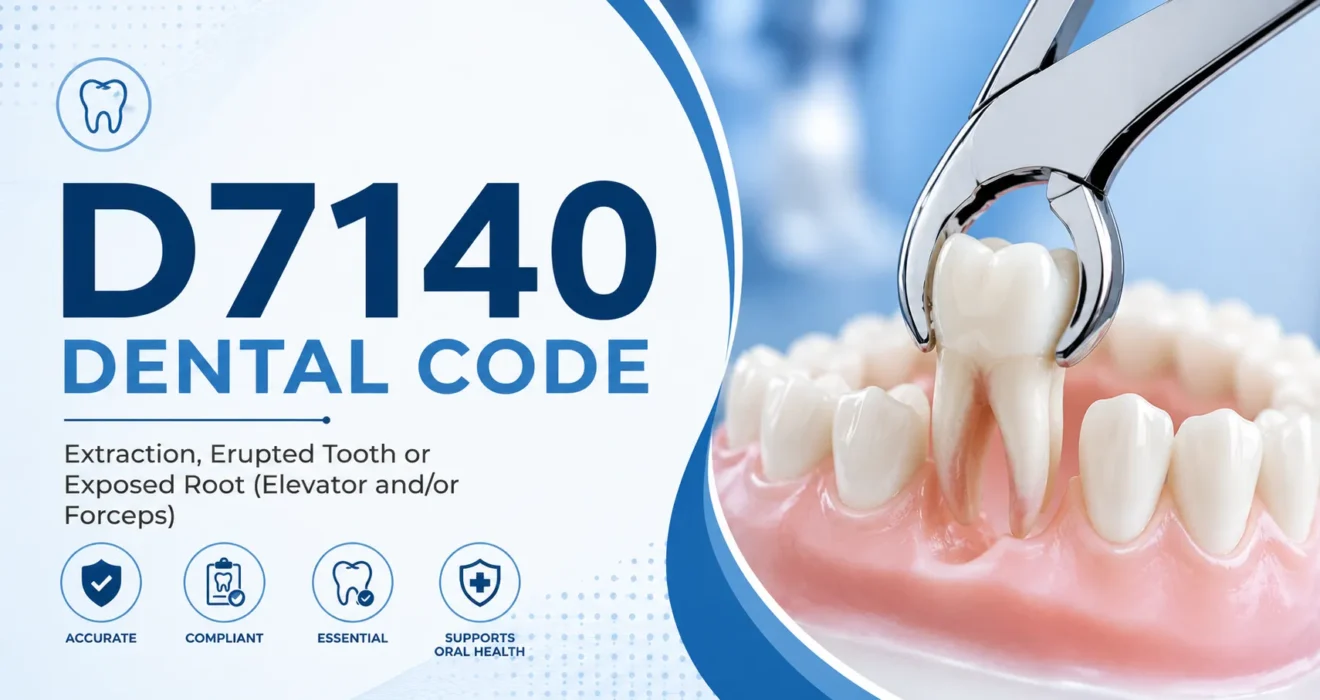
The American Dental Association maintains a standardized list of procedure codes called CDT codes. D7140 sits within this system and specifically describes a simple tooth extraction. Dentists use it when they remove an erupted tooth or an exposed root using elevation and forceps. The code does not apply when a dentist must cut into bone or section a tooth into pieces.
Insurance companies rely on these codes to process claims accurately and quickly. When a dental office submits D7140, the insurer immediately understands the type of procedure performed. This clarity reduces billing errors and speeds up reimbursement for both the patient and the provider. Without standardized codes, dental billing would become chaotic and inconsistent across practices.
A simple extraction under D7140 differs significantly from a surgical extraction. Surgical extractions often require cutting gum tissue or removing bone to access a tooth. D7140 procedures, by contrast, involve teeth that are already visible and accessible above the gumline. The dentist simply loosens the tooth and lifts it out without additional surgical steps.
General dentists typically perform D7140 extractions in a standard office setting. They administer local anesthesia to numb the area before starting the procedure. Using an elevator tool, the dentist gently loosens the tooth within its socket. Forceps then grip the tooth firmly, allowing the dentist to remove it with controlled pressure.
Accurate coding matters greatly for both clinical records and financial transparency. Patients benefit from knowing exactly what procedure they received and why. Dental practices avoid compliance issues by coding procedures correctly according to ADA guidelines. This accuracy also protects practices during insurance audits or disputes.
Many patients require a D7140 extraction for reasons ranging from decay to overcrowding. The procedure remains one of the most common services performed in general dentistry. Its simplicity makes it a fast, low-risk option compared to more invasive surgical alternatives. Patients usually recover quickly with proper aftercare guidance.
When Is the D7140 Code Used?
Dentists turn to the D7140 code in specific clinical situations. The tooth must be erupted and visible, or the root must already be exposed. This condition rules out impacted teeth, which require more complex codes entirely.
Common Reasons for a D7140 Extraction
Patients typically need this procedure due to one of the following issues:
- Severe tooth decay that has destroyed too much structure to support a filling or crown
- Advanced periodontal disease causing loose teeth that cannot be saved
- Fractured or cracked teeth beyond the point of restoration
- Orthodontic treatment planning that requires extra space in the mouth
- Baby teeth that fail to fall out naturally and block permanent teeth
- Failed root canal treatment where the tooth no longer remains viable
Who Is a Candidate for This Procedure?
Most patients qualify as candidates if their tooth sits above the gumline and shows no signs of bone impaction. Dentists confirm eligibility through a visual exam combined with an X-ray. Patients with underlying health conditions should always disclose their full medical history before any extraction. This step ensures the dentist selects the safest, most appropriate approach for treatment.
D7140 vs. Other Extraction Codes: Key Differences
Understanding how D7140 compares to other extraction codes prevents billing confusion. Each code reflects a different level of procedural complexity.
- D7140 – Simple Extraction: Covers erupted teeth removed with elevation and forceps only, without bone removal.
- D7210 – Surgical Extraction: Applies when a dentist must remove bone or section the tooth, often involving a small flap incision.
- D7220 – Soft Tissue Impaction: Used when a tooth is impacted but only covered by gum tissue, not bone.
- D7230 – Partial Bony Impaction: Applies to teeth partially covered by bone, requiring more extensive removal.
- D7240 – Complete Bony Impaction: Reserved for teeth fully encased in bone, representing the most complex extraction category.
These distinctions matter because insurance reimbursement rates vary by code. A surgical extraction billed incorrectly as D7140 can trigger claim denials or audits. Patients should always ask their dentist which code applies to their specific procedure before treatment begins.
What Happens During a D7140 Extraction Procedure
Patients often feel anxious before an extraction simply because they don’t know what to expect. The D7140 process follows a predictable, straightforward sequence.
- Examination and X-ray: The dentist reviews the tooth’s position and confirms it qualifies for a simple extraction.
- Anesthesia administration: A local anesthetic numbs the surrounding gum tissue and nerve endings.
- Tooth loosening: The dentist uses an elevator tool to gently separate the tooth from its ligaments.
- Extraction with forceps: Forceps grip the tooth securely, allowing controlled removal from the socket.
- Site management: The dentist places gauze over the socket to control bleeding and encourage clot formation.
- Post-procedure instructions: The dentist explains aftercare steps and schedules a follow-up if needed.
The entire procedure usually takes only a few minutes per tooth. Most patients return home the same day without needing extended recovery time at the office.
Insurance Coverage and Billing Considerations for D7140
Insurance coverage for D7140 extractions varies depending on the specific dental plan. Most PPO and HMO dental plans cover a portion of the cost, though percentages differ widely. Patients should review their deductible, annual maximum, and co-insurance percentage before scheduling treatment.
Always confirm coverage details with your insurance provider before the appointment date. Some plans require pre-authorization for extractions, especially when multiple teeth need removal. Skipping this step can result in unexpected out-of-pocket expenses.
Dental offices typically submit claims directly using the D7140 code, simplifying the process for patients. However, patients without insurance should request a clear cost estimate upfront. Many practices offer payment plans or financing options for extractions not fully covered by insurance.
Billing errors sometimes occur when a simple extraction is miscoded as a surgical procedure, or vice versa. Patients should review their explanation of benefits carefully after treatment. Contacting the dental office promptly resolves most coding discrepancies before they escalate into bigger disputes.
Recovery and Aftercare Tips After a D7140 Extraction
Recovery from a D7140 extraction is generally quick, but proper aftercare speeds healing significantly. Following these steps helps reduce discomfort and prevent complications.
- Apply an ice pack to the cheek for the first 24 hours to reduce swelling
- Eat soft foods like yogurt, soup, and mashed potatoes for the first two days
- Avoid using straws, since suction can dislodge the healing blood clot
- Rest for at least 24 hours and avoid strenuous physical activity
- Rinse gently with warm salt water starting the day after the procedure
- Take prescribed or recommended pain relievers exactly as directed
- Attend any scheduled follow-up appointment to confirm proper healing
Most patients notice significant improvement within three to five days. Contact your dentist immediately if you experience prolonged bleeding, severe pain, or signs of infection such as fever or unusual swelling.
Conclusion
The D7140 dental code identifies a simple, common extraction performed on erupted teeth or exposed roots. Dentists rely on this code to communicate clearly with insurance providers and maintain accurate patient records. Unlike surgical extraction codes, D7140 involves no bone removal or tissue flaps, making it a faster and less invasive option. Patients facing decay, gum disease, fractures, or orthodontic needs often encounter this code during treatment planning. Understanding the procedure steps, insurance considerations, and aftercare tips empowers patients to approach their extraction with confidence. By asking the right questions and following recovery guidelines closely, patients can ensure a smooth experience from start to finish.