D8080 Dental Code Explained: Billing, Eligibility, and Treatment Guide
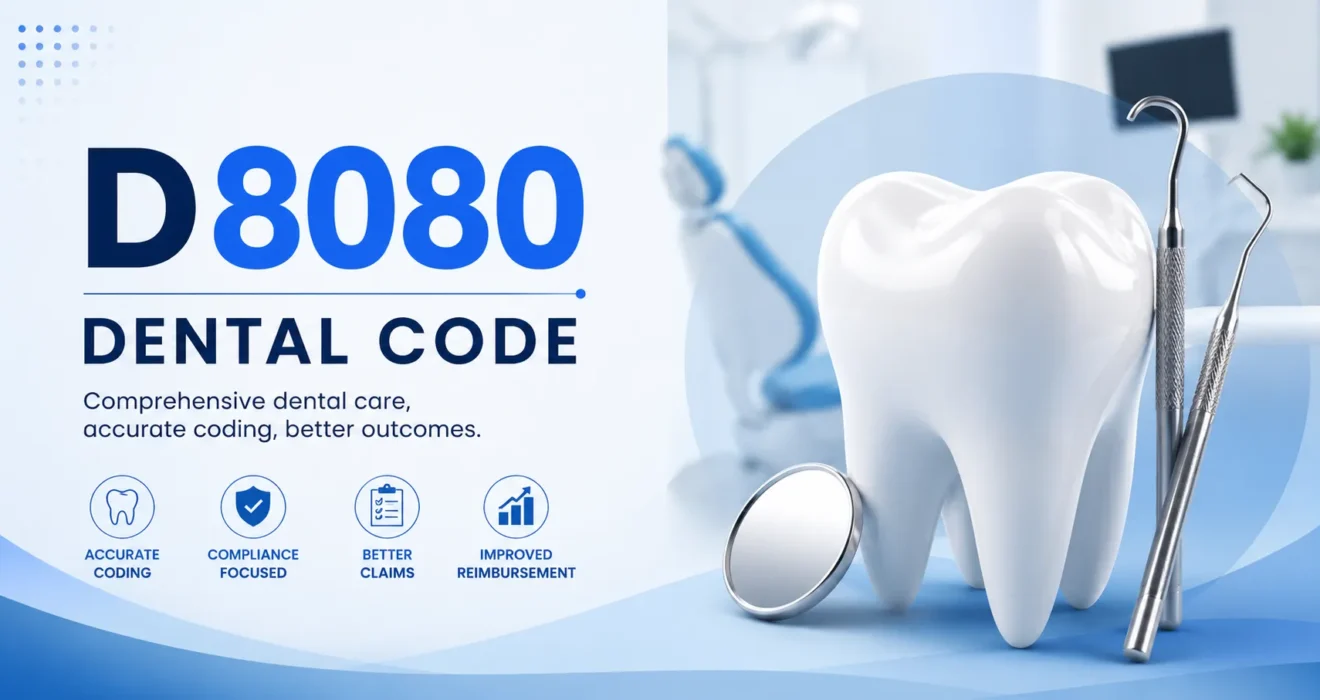
Dental billing teams handle dozens of CDT codes every week. The D8080 dental code causes more confusion than most, because it sits close to several similar orthodontic codes. This guide clears up exactly what D8080 means, who it applies to, and how your practice can bill it without denials. You will learn the age range it covers, the documentation insurers expect, and how it differs from related codes like D8070 and D8090. Whether you run a billing desk or manage an orthodontic practice, this breakdown gives you a practical reference you can return to during claim season.
What Is the D8080 Dental Code?
The D8080 dental code identifies comprehensive orthodontic treatment of the adolescent dentition. Dental practices use it when a young patient needs full correction of bite and alignment problems rather than a small, targeted fix. Insurers and the ADA classify this code under the orthodontics section of the CDT manual, separate from general restorative or preventive codes.
Most patients who qualify fall between 11 and 19 years old. At this stage, most permanent teeth have erupted, though the jaw may still be growing. This growth window matters, because orthodontists can guide tooth movement more efficiently before the jaw fully matures.
The treatment under D8080 covers both dental arches. It addresses crowding, spacing, overbite, underbite, and other malocclusion issues across the full mouth, not just one or two teeth. Orthodontists typically use braces, though some clear-aligner systems also qualify under this code when treatment meets the same comprehensive standard.
Insurance companies expect this code to represent a complete treatment plan, not a quick adjustment. A typical case runs between 18 and 30 months, depending on severity. The orthodontist sets milestones throughout this period, and the practice bills follow-up visits separately from the initial comprehensive fee.
Dental teams should never use D8080 for limited orthodontic work. If a patient only needs a minor space closure or single-arch correction, a different code applies. Mixing up limited and comprehensive codes is one of the most common reasons claims bounce back from payers.
Coders also need to confirm dentition stage before submitting a claim. A patient’s chronological age matters less than whether their permanent teeth have erupted enough to support full comprehensive treatment. This is why dentists rely on radiographs and clinical exams rather than birth dates alone.
When Should You Use D8080? Eligibility and Clinical Criteria
Who Qualifies for This Code
Dentists assign the D8080 code based on dentition stage, not strictly age. That said, most qualifying patients share a few common traits:
- They typically fall between 11 and 19 years old
- Most or all permanent teeth, excluding third molars, have already erupted
- They show a diagnosed malocclusion affecting function, appearance, or both
- Treatment will involve both the upper and lower arches together
Conditions That Commonly Justify D8080
Orthodontists usually document one or more of the following before submitting a D8080 claim:
- Class II or Class III malocclusion
- Severe dental crowding across multiple teeth
- Significant overbite or underbite affecting bite function
- Open bite or crossbite involving several teeth
- Combination cases that need full-arch movement rather than isolated correction
Why Documentation Matters Here
Insurers will not approve a comprehensive code on a brief note alone. Practices need diagnostic photos, radiographs, a written treatment plan, and a clear narrative explaining why the case requires full treatment rather than a limited approach. Skipping this step is one of the fastest ways to trigger a claim rejection.
D8080 vs. Other Orthodontic Codes: Spotting the Differences
Many billing errors happen because D8080 looks similar to its neighboring codes. Here is how they actually differ:
D8070 – Comprehensive treatment, transitional dentition This code applies to younger patients who still have a mix of baby and permanent teeth. Orthodontists use it when starting comprehensive treatment earlier than typical adolescent timing.
D8080 – Comprehensive treatment, adolescent dentition This is the code covered in this guide. It applies once most permanent teeth have erupted but before full adult maturity.
D8090 – Comprehensive treatment, adult dentition Once a patient is a fully grown adult with a stable, mature dentition, billing shifts to D8090 instead of D8080, even if the treatment itself looks identical clinically.
A simple way to remember the distinction: think of D8070, D8080, and D8090 as a progression based on dental maturity, not patient preference or insurance plan. The treatment goals stay similar across all three codes; only the dentition stage changes which code applies.
Limited treatment codes, such as D8010 through D8040, sit in a completely separate category. These apply only when a dentist treats a narrow, specific problem rather than the full mouth. Confusing limited and comprehensive codes remains one of the top reasons orthodontic claims get denied or delayed.
Billing and Documentation Requirements for D8080
Step-by-Step Billing Workflow
Most practices follow a similar sequence when preparing a D8080 claim:
- Verify insurance benefits before starting treatment, including lifetime orthodontic maximums and any age restrictions on coverage.
- Collect diagnostic records, including photos, radiographs, and a written treatment plan with measurable goals.
- Submit a pre-authorization request with a clinical narrative explaining why comprehensive treatment is necessary.
- Confirm patient and provider details are accurate before submitting the claim, since small data errors cause unnecessary rejections.
- Bill the initial D8080 fee, then track and bill periodic visits separately according to payer rules.
- Maintain ongoing progress notes throughout treatment in case of future audits or appeals.
What Insurers Typically Require
Payers generally expect to see:
- A clear malocclusion diagnosis supported by clinical findings
- Pre-treatment photographs and radiographic images
- A documented treatment plan with an estimated timeline
- Notes confirming both arches require comprehensive correction
Practices that skip even one of these elements often see slower approvals or outright denials.
Common Mistakes That Lead
Billing teams run into a handful of recurring issues with this code. Watch out for these:
- Using D8080 for a patient whose dentition still qualifies as transitional, instead of adolescent
- Submitting claims without enough diagnostic documentation to justify comprehensive treatment
- Billing periodic visits incorrectly instead of following the payer’s specific follow-up code rules
- Forgetting to separately document retention and retainer services after braces come off
- Mixing up D8080 with D8090 when a patient ages into adulthood mid-treatment
Reviewing each claim against this list before submission can prevent a meaningful share of denials and resubmissions.
Why Comprehensive Adolescent Orthodontic Treatment Matters
Beyond billing mechanics, D8080 represents real clinical value for growing patients. Correcting malocclusion during adolescence often works faster and more predictably than waiting until adulthood, because the jaw still has some growth potential.
Patients who receive comprehensive treatment under this code typically gain:
- Improved chewing function and bite alignment
- Reduced risk of long-term jaw strain or uneven tooth wear
- Better-aligned teeth that are easier to clean and maintain
- A noticeable boost in confidence during a developmentally sensitive age
For families and providers alike, understanding this code clearly means fewer billing surprises and a smoother path through a multi-year treatment process.
Conclusion
The D8080 dental code covers comprehensive orthodontic treatment for adolescent patients, generally between ages 11 and 19, who need full-arch correction of malocclusion. Getting it right comes down to three things: confirming the patient’s dentition stage, distinguishing it from related codes like D8070 and D8090, and submitting complete documentation with every claim. Dental practices that build a consistent workflow around these steps see fewer denials, faster reimbursements, and smoother treatment journeys for their patients. Keep this guide handy the next time your team prepares a comprehensive orthodontic claim.