D2950 Dental Code Explained: Core Buildup Billing & Denials
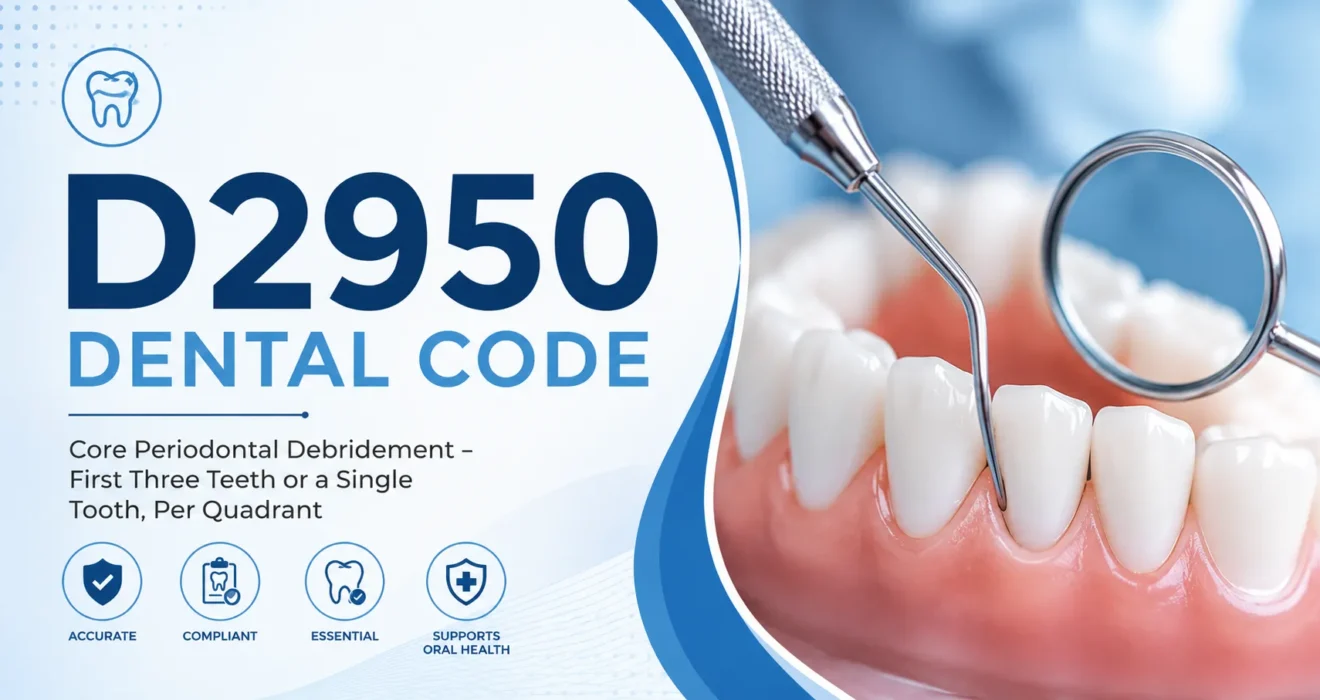
Dental billing teams see the D2950 dental code almost every week, yet many still misuse it. This CDT code covers a core buildup, a procedure that rebuilds a damaged tooth before a crown goes on. Insurers scrutinize D2950 closely, and small documentation gaps often trigger denials. This guide breaks down what the code means, when it applies, and how it differs from look-alike codes. You’ll also learn practical billing tips that help your claims get approved the first time. Whether you run a front-desk billing department or simply want to understand a charge on your dental bill, this article gives you a clear, complete picture of D2950.
What Is the D2950 Dental Code?
The D2950 dental code stands for “core buildup, including any pins when required.” Dentists use it when a tooth has lost so much natural structure that a crown cannot be placed safely without extra support underneath it. The procedure rebuilds the internal anatomy of the tooth so it can hold up under normal biting forces.
A core buildup is not a filling, and it is not a crown. Instead, it acts as a foundation that sits between the two. Picture a house with a cracked foundation; before you can add a new roof, you need to repair what’s underneath. A dental core buildup works the same way for a weakened tooth.
Dentists typically use composite resin, amalgam, or other restorative materials to perform the buildup. When the remaining tooth structure is especially thin, the dentist may also insert small pins or posts to anchor the material in place. The code name reflects this, since pins are included automatically whenever they’re clinically necessary.
Most insurance plans only approve D2950 when a specific clinical threshold is met. Many payers require that roughly half or more of the tooth’s visible structure be missing after decay removal and preparation. This threshold protects against the code being billed for routine, minor repairs.
D2950 almost always appears alongside a crown code on the same treatment plan. The buildup happens first, then the crown follows once the tooth has healed and the restoration is ready. Insurers often look for this sequence when they review a claim.
Understanding this code matters for both providers and patients. Dentists need accurate billing to get paid fairly for necessary work, while patients benefit from knowing why a particular charge appeared on their treatment estimate.
When Should a Dentist Use the D2950 Dental Code?
Not every damaged tooth qualifies for a core buildup. The American Dental Association reserves this code for cases where structural support, not cosmetic improvement, is the goal.
Common Clinical Situations
Dentists generally turn to D2950 when one of these situations applies:
- A tooth has deep decay that removed a large portion of its natural crown
- A fracture or cusp break leaves insufficient structure to hold a crown
- A tooth has undergone root canal therapy and the surrounding walls are thin
- Old, failing fillings have weakened the tooth to the point of collapse risk
- The remaining dentin cannot grip a crown without added retention
Situations Where D2950 Does Not Apply
Billing teams should avoid this code in the following cases:
- Minor undercuts or small irregularities, which fall under code D2949 instead
- Routine fillings that don’t precede a crown placement
- Buildups performed solely to make an impression easier to capture
- Temporary restorations meant only for short-term use
- Cases where a prefabricated post and core procedure (D2954) is the better fit
Choosing the correct scenario from the start prevents costly claim rework later.
D2950 vs. Similar CDT Codes: Avoiding Mix-Ups
Dental coding includes several procedures that sound alike but serve very different purposes. Confusing them is one of the leading causes of claim denials.
Key Differences at a Glance
- D2950 (Core Buildup): Rebuilds significant lost tooth structure to support a crown, with pins included when needed.
- D2949 (Restorative Foundation): Addresses small undercuts or minor irregularities rather than major structural loss.
- D2954 (Prefabricated Post and Core): Used when a post is placed inside a root canal-treated tooth in addition to the core material.
- D2915 (Re-cementing Cast or Prefabricated Post and Core): Applies only when an existing post and core become loose and need re-attachment.
- D2910 (Re-cementing Inlay, Onlay, or Veneer): Covers re-bonding an existing indirect restoration, not building new structure.
- D2920 (Re-cementing Crown): Used solely to reseat a crown that has come loose, with no buildup involved.
Reviewing this list before submitting a claim helps billing staff match the procedure performed to the correct code. Even a single digit difference between codes can change reimbursement outcomes entirely.
How to Bill the D2950 Dental Code Correctly
Clean documentation is the single biggest factor in getting a D2950 claim approved. Insurers want clear evidence that the buildup was clinically necessary, not optional.
Documentation Checklist
Strong claims usually include the following:
- Pre-operative radiographs showing the extent of tooth structure loss
- Clinical notes describing the percentage of missing structure
- Intraoral photographs, when available, to support the written notes
- A clear treatment sequence linking the buildup to a planned crown
Sequencing With the Crown
Most insurers expect the crown’s seating date to appear in the claim history within a reasonable window after the buildup. Submitting both procedures with consistent dates avoids confusion during claims review. Some plans also require pre-authorization before the buildup is performed, so checking benefits ahead of treatment saves time later.
Accuracy in coding, combined with thorough notes, gives dental practices the strongest chance of fair, fast reimbursement.
Why Do Insurers Deny D2950 Claims?
Even well-performed procedures sometimes get denied because of how the claim was submitted. Knowing the common triggers helps practices avoid them.
Frequent Denial Triggers
Claims often get rejected for these reasons:
- Documentation that doesn’t clearly show the required structural loss
- Coding D2950 when D2949 would have been the more accurate choice
- Missing or inconsistent crown seating dates
- Lack of supporting radiographs or photographs
- Submitting the buildup as part of a same-day root canal without separating the procedures clearly
What to Do After a Denial
If a payer denies a D2950 claim, the practice should review the explanation of benefits carefully, gather any missing documentation, and submit a focused appeal letter that references the clinical necessity and the CDT code definition. Persistence, paired with solid records, resolves many denials on appeal.
Conclusion
The D2950 dental code plays an essential role in restorative dentistry, giving weakened teeth the foundation they need before a crown can succeed long-term. It applies specifically to significant structural loss, not minor repairs, and it differs in important ways from neighboring codes like D2949 and D2954. Dental teams that document thoroughly, sequence their claims correctly, and double-check code selection see far fewer denials. Patients, in turn, gain a clearer understanding of why this procedure appears on their treatment plan. Whether you’re a billing specialist refining your claims process or a patient reviewing a dental estimate, understanding D2950 helps everyone involved make more informed, confident decisions about restorative care.