Mexico Antibiotics: Everything You Need to Know Before You Buy, Travel, or Self-Treat
Every year, millions of Americans, Canadians, and international travelers cross the border into Mexico — and millions of them come back with something other than souvenirs. Mexico antibiotics have become one of the most searched health topics for travelers, expats, and even locals looking for affordable, fast access to medications that can cost hundreds of dollars back home.
In the United States, antibiotics require a doctor’s prescription, which means a visit to a clinic, a waiting period, insurance paperwork, and often a hefty copay. In Mexico, the situation has historically been very different. Many pharmacies — particularly the small, independent farmacias dotted throughout border towns like Tijuana, Ciudad Juárez, and Nogales — have sold antibiotics directly to customers without requiring any prescription at all.
But is this practice legal? Is it safe? And what do you actually need to know before you walk into a Mexican pharmacy and ask for amoxicillin? The answer is more nuanced than a simple yes or no. Mexico’s regulatory environment has been tightening in recent years, enforcement is inconsistent, and the consequences of misusing antibiotics — whether you buy them in Mexico City or Manhattan — can be severe.
This article is your complete, fully researched guide to Mexico antibiotics. Whether you are a tourist who picked up an infection on your trip, an expat managing a chronic condition, a budget traveler trying to avoid a $300 urgent care bill, or simply curious about cross-border healthcare, this guide covers everything you need to know — from what antibiotics are available, to what the laws say, to what the doctors warn about.
By the end of this 3,000-word deep-dive, you will have a clear, honest picture of what buying antibiotics in Mexico means in practice — the benefits, the real dangers, and the smartest approach for your specific situation.
Can You Buy Antibiotics Over the Counter in Mexico?
The Legal Reality of OTC Antibiotic Sales in Mexico
The legal answer and the practical reality in Mexico have long been two different things. Under Mexican federal law, antibiotics are classified as medicamentos controlados — controlled medications — that technically require a valid prescription from a licensed physician. The Ley General de Salud (General Health Law) mandates this, and COFEPRIS (now COFEMER), Mexico’s federal health regulatory agency, has issued repeated directives tightening antibiotic sales rules.
However, enforcement has been notoriously inconsistent. For decades, independent farmacias throughout Mexico — especially in tourist zones and border towns — sold antibiotics freely to walk-in customers with no questions asked. This practice was so widespread that it became a well-known cultural feature of Mexican healthcare access.
What Changed After 2010?
- In 2010, Mexico passed stricter regulations requiring prescriptions for antibiotics.
- Major pharmacy chains like Farmacias del Ahorro, Farmacias Guadalajara, and Walmart-affiliated pharmacies began complying more strictly.
- Small independent pharmacies, particularly in border regions and tourist areas, often continued selling OTC antibiotics with minimal enforcement.
- By 2020–2024, crackdowns became more frequent, but compliance remains uneven across states and municipalities.
What This Means for You Today
If you walk into a large chain pharmacy in Mexico City today, there is a good chance you will be asked for a prescription. If you walk into a small farmacia in a border town, there is still a reasonable chance the pharmacist will sell you amoxicillin without one. This inconsistency is the defining reality of Mexico antibiotics in 2025.
Most Common Antibiotics Available in Mexico (and What They Treat)
A Practical Breakdown of What You’ll Find on Mexican Pharmacy Shelves
Mexico antibiotics cover a wide spectrum of bacterial infections. Here is a breakdown of the most commonly available options and their typical medical uses:
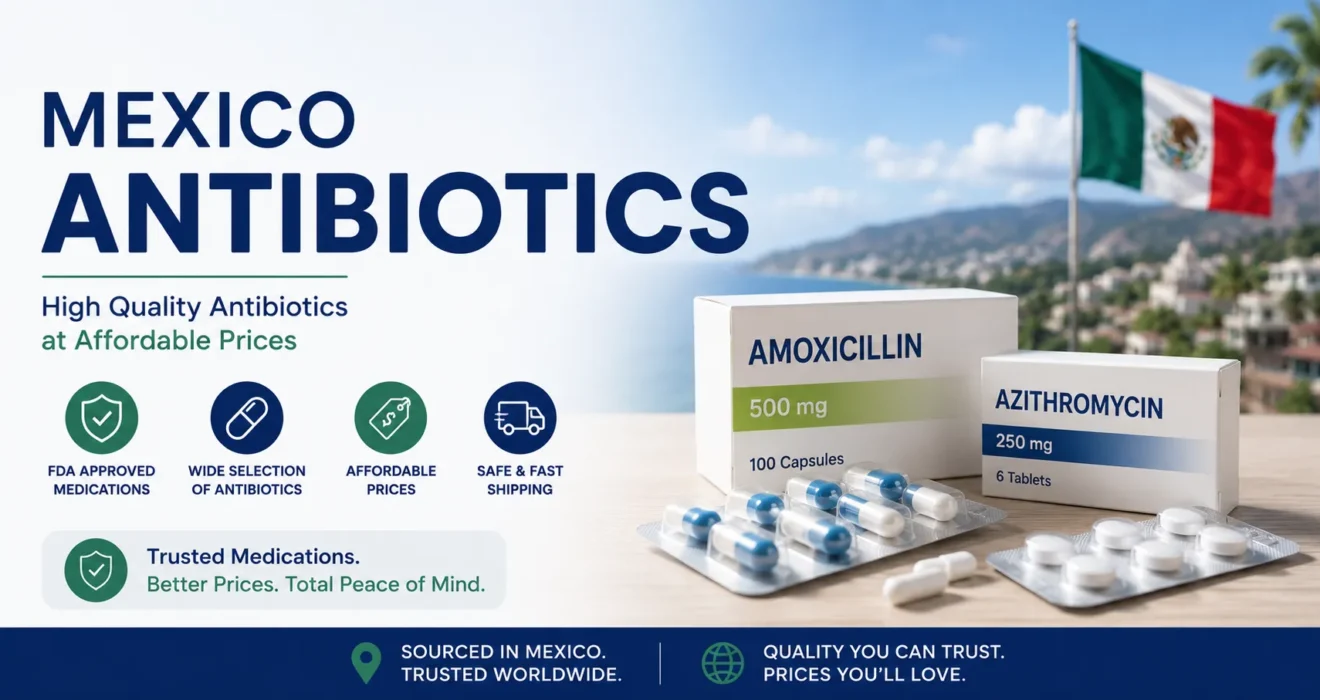
Amoxicillin (Amoxil, Trimox) One of the most widely available antibiotics in Mexican pharmacies. Used for throat infections, ear infections, urinary tract infections (UTIs), and dental abscesses. Often sold in 500mg capsule packs.
Ciprofloxacin (Cipro) A fluoroquinolone antibiotic used for UTIs, traveler’s diarrhea, respiratory infections, and some skin infections. This is one of the most sought-after antibiotics among travelers. Available widely but increasingly requiring prescription at larger chains.
Azithromycin (Zithromax / Z-Pack) Used for respiratory infections, ear infections, STIs, and traveler’s diarrhea. The famous “Z-Pack” — a 5-day course — is heavily requested by American travelers. Still accessible in many Mexican pharmacies.
Metronidazole (Flagyl) Treats bacterial and parasitic infections including giardia, bacterial vaginosis, and certain gut infections. Often paired with other antibiotics for stomach-related illness.
Doxycycline Used for Lyme disease, malaria prophylaxis, acne, and respiratory infections. Popular among travelers headed to tropical regions of Mexico.
Trimethoprim-Sulfamethoxazole (TMP-SMX / Bactrim) Commonly used for UTIs, traveler’s diarrhea, and skin infections. One of the most affordable antibiotics in Mexican pharmacies.
Risks of Buying and Using Antibiotics in Mexico Without a Prescription
Why “Easy Access” Doesn’t Mean “Risk-Free”
This is the section most travelers skip — and the one they most need to read.
The ability to buy Mexico antibiotics without a prescription feels like a freedom, especially when you are sick, far from home, and facing a $250 urgent care visit back in the U.S. But that freedom comes packaged with a set of genuine medical risks that can turn a manageable infection into a serious health crisis.
Risk 1: Misdiagnosis Not every infection is bacterial. Viral infections — the common cold, most sore throats, many respiratory illnesses — do not respond to antibiotics at all. Taking antibiotics for a viral infection provides zero benefit and 100% of the side effects and resistance risk.
Risk 2: Wrong Antibiotic, Wrong Dose Different bacteria respond to different antibiotics. Taking the wrong drug for your specific infection can allow the bacteria to multiply unchecked while giving you false confidence that you are being treated.
Risk 3: Antibiotic Resistance This is the global health crisis hiding inside every unnecessary antibiotic prescription. When antibiotics are taken incorrectly — wrong drug, wrong dose, incomplete course — bacteria can develop resistance. This makes future infections harder to treat for you and contributes to the broader public health emergency of drug-resistant bacteria.
Risk 4: Drug Interactions and Allergies Antibiotics interact with many common medications including blood thinners, antacids, and birth control. Without a doctor reviewing your medication history, you risk dangerous interactions.
Risk 5: Counterfeit and Substandard Medications While major Mexican pharmacy chains are generally reliable, some smaller farmacias — especially those in tourist areas aggressively catering to foreign buyers — have been found stocking counterfeit or improperly stored medications that contain incorrect dosages or inactive compounds.
Mexico Antibiotics vs. USA: Cost, Access, and Legal Differences
A Side-by-Side Comparison That Explains Why People Cross the Border
The cost difference between buying antibiotics in Mexico versus the United States is dramatic enough to drive a multi-billion dollar medical tourism industry. Here is a direct comparison:
| Antibiotic | USA (Without Insurance) | Mexico (Approximate) |
|---|---|---|
| Amoxicillin 500mg (21 caps) | $15–$45 | $3–$8 |
| Ciprofloxacin 500mg (14 tabs) | $30–$80 | $5–$15 |
| Azithromycin Z-Pack | $35–$75 | $6–$18 |
| Doxycycline 100mg (14 tabs) | $20–$60 | $4–$12 |
| Metronidazole 500mg (21 tabs) | $20–$50 | $3–$9 |
Beyond cost, the access model differs fundamentally. In the USA, accessing antibiotics requires a licensed physician visit (minimum $75–$200 without insurance), a diagnosis, and a written or electronic prescription. Telehealth services have eased this somewhat, but the gatekeeper model remains intact.
In Mexico, the pharmacist has historically functioned as a de facto primary care provider for millions of Mexicans who cannot afford or access doctors. This reflects a genuine public health access issue — not simply regulatory laxity.
What Travelers Need to Know About Bringing Mexico Antibiotics Home
Customs, Legality, and Practical Advice for Cross-Border Medication Transport
Many travelers buy Mexico antibiotics with every intention of bringing them back across the border. Here is what the law actually says — and what happens in practice.
US Customs and Border Protection (CBP) Rules:
- You may bring a personal-use supply of prescription medication into the United States.
- The FDA generally allows up to a 90-day supply for personal use.
- Medications should ideally be in their original labeled packaging.
- Controlled substances and narcotics face much stricter scrutiny.
- Antibiotics are not controlled substances in the U.S., which makes them lower-risk for border crossing.
Practical Reality at the Border: CBP agents rarely confiscate antibiotics being brought across the border in personal quantities. However, this is discretionary — agents can seize any medication at their judgment. Travelers have reported being waved through with amoxicillin, and others have had medications inspected. The safest approach: carry your medications in labeled packaging with a receipt, carry only what you personally need, and be honest if asked.
Important Note on Prescription Requirements: Even if a Mexican pharmacy sold you antibiotics without a prescription, the U.S. technically classifies antibiotics as prescription-only drugs. Bringing them back without a U.S. prescription is a legal gray area — tolerated in practice, but not explicitly authorized.
Real Talk: What People Actually Experience
This question appears regularly on Quora, Reddit, and travel forums, and the answers reveal the full spectrum of real-world experience with Mexico antibiotics.
The consensus from the Quora community and travel forums breaks down like this:
- Travelers with clear, previously diagnosed infections (recurrent UTIs, known traveler’s diarrhea, dental infections) generally report positive experiences buying familiar antibiotics in Mexico — they knew exactly what they needed and got it quickly and cheaply.
- Travelers self-diagnosing for the first time report mixed results — some got better, some got worse, and some discovered they had a viral illness that antibiotics did not help at all.
- Expats living in Mexico long-term often develop relationships with local doctors who provide prescriptions at very low cost ($10–$20 for a clinic visit), combining the affordability of Mexican pharmacy prices with the safety of medical supervision.
- Medical professionals universally advise consulting a doctor before taking any antibiotic, even in Mexico, even if access is easy. The antibiotic resistance crisis is real, and individual misuse contributes to it.
The smartest community-sourced advice: If you are in Mexico and genuinely need antibiotics, consider visiting one of the consultorios médicos (small clinics) attached to many Mexican pharmacies. A licensed doctor visit often costs only $3–$10 USD, you get a proper diagnosis, and you get a prescription that legitimizes your purchase.
Conclusion
Mexico antibiotics represent one of the clearest examples of the tension between healthcare access, personal freedom, regulatory intent, and public health responsibility. For millions of people — both Mexicans and foreign travelers — the ability to walk into a farmacia and get treatment for a bacterial infection without navigating an expensive healthcare system represents genuine, life-improving access to medicine.
At the same time, the risks of antibiotic misuse are real, well-documented, and growing. Antibiotic resistance is one of the most serious global health challenges of our era, and every unnecessary or incorrect antibiotic use contributes to it. Counterfeit medications exist. Misdiagnosis happens. Drug interactions hurt people.
The smart traveler’s approach to Mexico antibiotics is this: Take advantage of Mexico’s low-cost healthcare access — but do it right. For $5–$15, you can see a licensed doctor at a pharmacy-attached clinic, get a proper diagnosis, receive the correct antibiotic if you need one, and cross back over the border with both your health and your peace of mind intact.
Mexico antibiotics are not a cheat code for the U.S. healthcare system. They are a window into how different countries balance access and regulation — and a reminder that affordable healthcare, when used responsibly, is something everyone deserves.