Implant Cost Per Tooth: Factors That Affect Your Final Bill
If you’ve recently lost a tooth, one of the first questions that probably comes to mind is, “How much does a dental implant cost?” It’s a fair question—and one that doesn’t always come with a simple answer. You may have seen advertisements promoting Dental Implants in Mexico for a few hundred dollars, while other dental offices quote several thousand dollars for what appears to be the same treatment. This leaves many patients confused about what the actual implant cost per tooth should be and whether the higher price is really worth paying. The truth is that dental implants are not a one-size-fits-all treatment. Every patient’s situation is different. The condition of your jawbone, the type of implant used, the experience of the dentist, and even where you live can all influence the final cost. More importantly, the price you see advertised often represents only one part of the treatment process. A complete dental implant involves multiple stages, each designed to ensure long-term success and durability. Understanding these stages can help you make a smarter financial decision and avoid unexpected expenses later.
In this guide, we’ll explore the average implant cost per tooth, explain what affects pricing, discuss hidden costs patients often overlook, and help you determine whether dental implants are truly worth the investment.
Why Is the Implant Cost Per Tooth So Different From One Clinic to Another?
One of the biggest misconceptions about dental implants is that there is a fixed price for treatment. In reality, two patients receiving implants on the same day may pay completely different amounts. This variation exists because implant dentistry is highly personalized. Unlike buying a product from a store, you’re paying for a combination of materials, expertise, technology, surgical skill, and long-term care. For example, a healthy patient with excellent bone density may only require a straightforward implant procedure. Another patient may need tooth extraction, bone grafting, and additional imaging before treatment can even begin.
The dentist’s experience also matters. An implant specialist with years of advanced training and thousands of successful cases will often charge more than a general dentist who places implants occasionally. While this can increase the initial cost, it may also improve long-term outcomes. Location plays a role as well. Dental practices in major cities often have higher operating expenses, which can be reflected in treatment pricing. As a result, implant costs in metropolitan areas are typically higher than those in smaller communities.
Understanding these factors helps explain why implant cost per tooth can range from a few thousand dollars to significantly more in complex cases.
What Are You Actually Paying For?
When patients receive a treatment estimate, they often assume the entire fee is for the implant itself. In reality, the implant is only one component of a much larger process.
The Initial Consultation
The first stage usually involves a comprehensive examination of your oral health. During this appointment, the dentist evaluates your gums, jawbone, bite alignment, and overall suitability for implant treatment.
Advanced Diagnostic Imaging
Modern implant dentistry relies heavily on technology.
Common diagnostic tools include:
- Digital X-rays
- Panoramic imaging
- Cone Beam CT scans
- Digital treatment planning software
These tools allow dentists to place implants with greater precision and predictability.
The Implant Fixture
The implant fixture is the titanium or zirconia post surgically inserted into the jawbone. This component functions as an artificial tooth root and provides the foundation for the replacement tooth.
The Healing Phase
Unlike many dental procedures, implant treatment requires time. After placement, the implant must fuse with the jawbone through a natural process known as osseointegration.
This healing period is critical for long-term stability.
The Abutment and Crown
Once healing is complete, the dentist attaches an abutment and custom-made crown. The crown is designed to match the color, shape, and appearance of your natural teeth.
The quality of these components can significantly affect both aesthetics and overall cost.
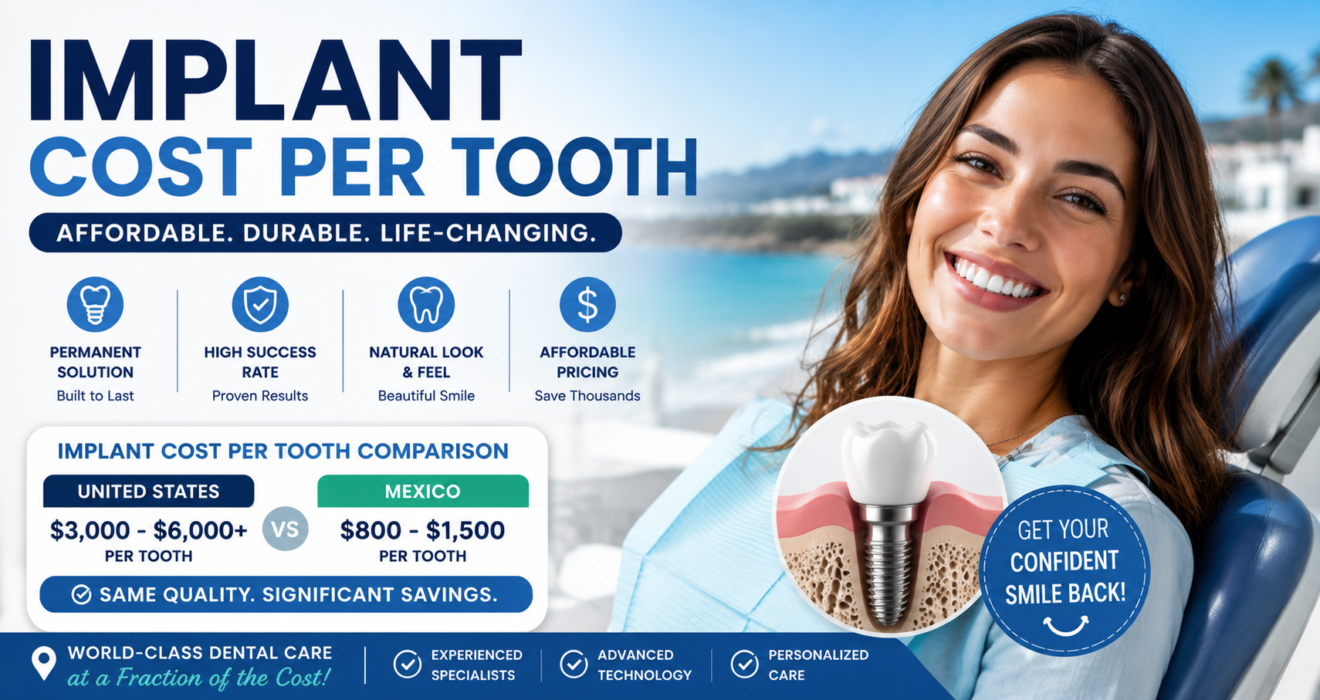
Average Implant Cost Per Tooth in 2026
Patients often ask for a straightforward price range.
While costs vary, the following estimates provide a general overview:
| Treatment Component | Average Cost |
|---|---|
| Consultation & Imaging | $150–$600 |
| Implant Placement | $1,500–$3,000 |
| Abutment | $300–$800 |
| Crown | $1,000–$2,500 |
| Total Per Tooth | $3,000–$6,500+ |
Complex cases involving additional procedures may exceed these estimates.
Rather than focusing solely on the lowest available price, patients should consider the overall quality and long-term value of treatment.
Hidden Costs Many Patients Don’t Expect
One reason people underestimate implant cost per tooth is that they fail to account for preparatory procedures.
Bone Grafting
When a tooth has been missing for an extended period, the jawbone may shrink due to lack of stimulation.
Bone grafting helps rebuild the foundation needed to support an implant.
Sinus Augmentation
For upper jaw implants, a sinus lift may be necessary if there isn’t enough available bone.
Tooth Extraction
A damaged or failing tooth often needs to be removed before implant placement can begin.
Temporary Restorations
Some patients require temporary replacement teeth while waiting for the implant to heal.
These services can increase the total investment but are often essential for achieving successful results.
Are Cheap Dental Implants Really a Good Deal?
It’s tempting to choose the lowest-priced option available, especially when implant treatment represents a significant financial commitment.
However, cheaper isn’t always better.
Low-cost providers may reduce expenses by using lower-quality materials, outsourcing laboratory work, or limiting diagnostic procedures. While this can lower upfront costs, it may increase the risk of complications or future repairs.
A failed implant often costs more to correct than investing in quality treatment from the beginning.
Patients should evaluate:
- Provider credentials
- Implant brand
- Technology used
- Patient reviews
- Warranty coverage
- Follow-up care
The goal should be long-term value rather than the lowest possible price.
Why Many Patients Consider Dental Implants Worth the Cost
Dental implants offer benefits that extend far beyond appearance.
Unlike removable dentures, implants become integrated with the jawbone, creating a stable and secure foundation.
Patients frequently report improvements in:
Confidence
A complete smile can significantly enhance self-esteem.
Comfort
Implants feel more natural than many alternative tooth replacement options.
Chewing Ability
Patients can enjoy a wider variety of foods without discomfort.
Speech
Because implants remain firmly in place, they can improve pronunciation and communication.
Jawbone Preservation
One of the most important advantages is the ability to prevent bone loss, which commonly occurs after tooth extraction.
These benefits contribute to the growing popularity of dental implants despite their higher initial cost.
Conclusion
The true implant cost per tooth involves much more than the implant itself. From consultations and diagnostic imaging to surgical placement and custom restorations, every stage contributes to the final investment. While treatment costs can vary widely based on location, materials, and individual needs, understanding the factors behind pricing helps patients make informed decisions. Rather than focusing only on the lowest quote, it’s important to consider experience, technology, quality, and long-term success. Dental implants mexico are designed to restore not just missing teeth but also comfort, confidence, and oral health. For many patients, that makes them one of the most valuable investments they can make in their smile.