D2740 Dental Code: The Complete Guide to Porcelain & Ceramic Crowns
Anyone who has ever looked at a dental bill knows it can feel like reading a foreign language. Codes like D2740 show up on insurance statements and treatment plans, yet most patients have no idea what they actually mean. The D2740 dental code refers specifically to a porcelain or ceramic crown, one of the most common restorative treatments in modern dentistry. Whether you are a patient trying to understand your bill or a dental office staff member double-checking a claim, this guide breaks down everything you need to know about D2740 in plain, easy-to-follow language.
What Is the D2740 Dental Code? (Understanding the Basics)
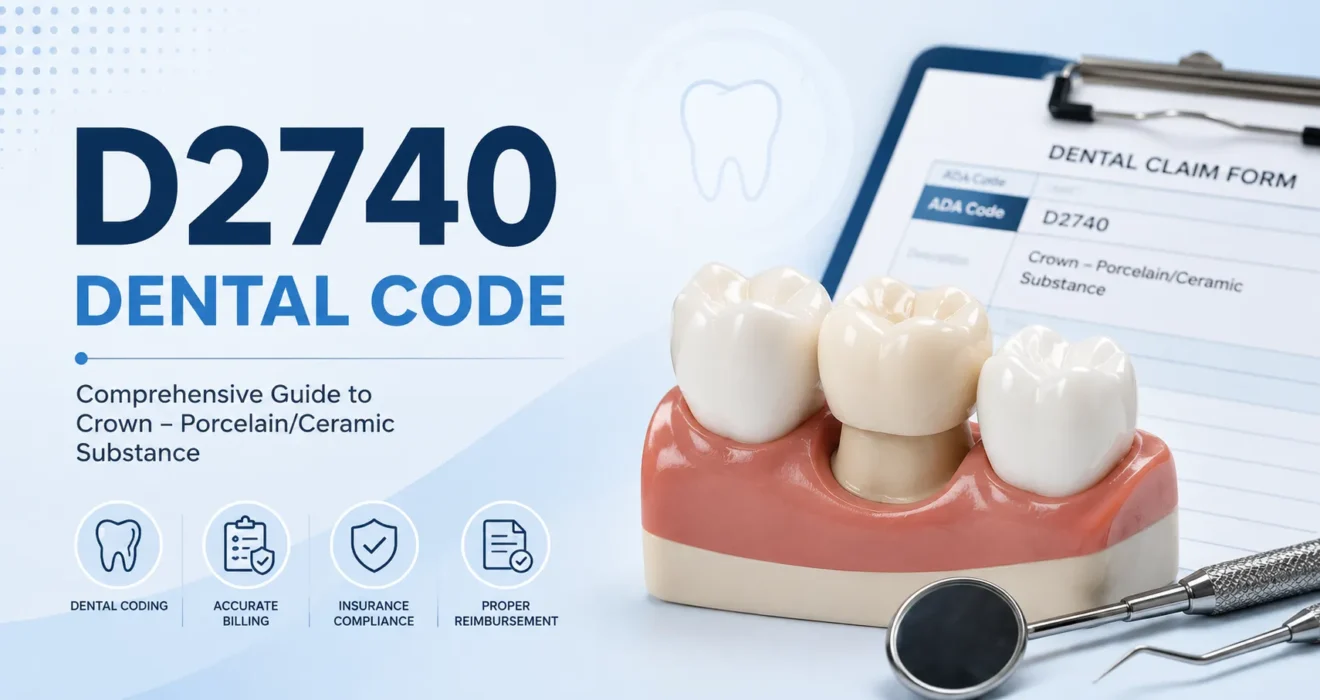
The D2740 dental code identifies a full-coverage crown made entirely of porcelain or ceramic material, with no metal underneath it. Dentists use this code whenever they restore a tooth using a lab-fabricated crown that covers the entire visible portion of the tooth above the gum line. Because the crown contains no metal substructure, it offers a natural, tooth-like appearance that many patients prefer, especially for teeth that show when they smile or talk.
This code falls under the restorative category of the CDT (Current Dental Terminology) coding system, specifically within the single-unit crown subcategory. Each CDT code follows a predictable structure: the letter “D” marks it as a dental procedure, the next two digits indicate the broad category, and the final two digits narrow down the exact type of treatment. For D2740, this structure points directly to an all-ceramic crown placed on a single natural tooth.
It is worth noting that the code was updated in 2018, when the American Dental Association removed the word “substrate” from the official description to reduce confusion. That change clarified that D2740 applies to porcelain and ceramic crowns, while crowns made primarily of zirconium received separate guidance over time. Dental offices that stay current with these revisions avoid unnecessary billing errors and claim denials.
D2740 exists alongside several related crown codes, and choosing the correct one matters a great deal. For instance, a porcelain-fused-to-metal crown uses an entirely different code because it contains a metal base layer beneath the porcelain. A resin-based crown also has its own separate code. Mixing these up, even by accident, can trigger a claim rejection or an unwanted downgrade in coverage.
Beyond billing accuracy, the D2740 code also plays an important role in a patient’s long-term dental record. Years later, if the patient switches dentists or needs follow-up care, an accurate code instantly tells the new provider exactly what type of restoration is already in the mouth. That small detail can save time, prevent repeat imaging, and guide better treatment decisions down the road.
Ultimately, D2740 is more than a billing formality. It represents a specific, well-defined dental procedure with its own clinical purpose, materials, and documentation standards. Understanding what sits behind this four-digit code helps patients ask better questions and helps dental teams submit cleaner, faster claims.
When Do Dentists Use the D2740 Code?
Not every crown qualifies for the D2740 code, so dentists rely on specific clinical situations to decide when it applies. The decision usually comes down to how much of the natural tooth structure remains and whether a metal-free restoration is the right fit for that particular tooth.
Common Clinical Scenarios
Dentists typically reach for the D2740 code in situations such as:
- A tooth with a fractured cusp or significant structural loss that a simple filling cannot repair
- A large, failing filling on a front tooth where appearance matters as much as strength
- A tooth that recently underwent root canal therapy and now needs protective, full coverage
- An older porcelain or ceramic crown that has worn out and requires replacement
- A discolored, chipped, or misshapen tooth being restored primarily for cosmetic reasons, alongside structural support
What Documentation Supports a D2740 Claim
Insurance companies expect more than just the code itself; they want proof that the treatment was necessary. Strong documentation protects both the dentist and the patient from delayed or denied claims. A solid D2740 claim usually includes:
- Pre-operative and post-operative photographs of the tooth
- Recent radiographs (X-rays) showing decay, fracture, or prior root canal treatment
- A clear written narrative explaining why a full-coverage crown was necessary
- Notes confirming that porcelain or ceramic, rather than metal, was the chosen material
Getting this paperwork right the first time means fewer back-and-forth requests from the insurance company and a much smoother path to reimbursement.
D2740 Dental Code Cost: What Factors Affect Your Price
One of the first questions patients ask after hearing about a D2740 crown is simple: how much will this cost? The honest answer is that pricing varies quite a bit from one practice to another, but understanding the moving parts makes the final number much less surprising.
Average Cost Range
Porcelain and ceramic crowns billed under D2740 generally fall into a mid-to-upper price range compared with other restorative options, since the materials and lab work involved tend to be more advanced than basic fillings or simpler crown types. Patients without insurance coverage should expect to pay a noticeably higher out-of-pocket amount than those with a dental plan that covers a portion of major restorative work.
Key Cost Factors
Several variables influence the final price tag for a D2740 crown:
- Geographic location – Dental costs in large metropolitan areas tend to run higher than in smaller towns or rural regions.
- Material selection – Advanced ceramics such as lithium disilicate or high-translucency porcelain often cost more than standard porcelain options.
- Tooth location – Crowns on front teeth sometimes require extra artistry to match surrounding teeth, which can affect lab fees.
- Dental lab and dentist expertise – Highly experienced dentists and premium labs frequently charge more for superior fit and finish.
- Insurance participation – Whether the dental practice is in-network with your plan significantly changes your final share of the cost.
Patients who ask for a written treatment plan before starting work can compare these factors clearly and avoid unexpected charges later.
Insurance Coverage for D2740: What You Need to Know
Insurance coverage for the D2740 dental code is rarely a simple yes-or-no answer. Most dental plans treat crowns as a major restorative service, which means coverage depends heavily on the specific terms written into each policy.
Will Your Plan Pay for It?
Many insurers will only reimburse a D2740 claim when the treatment meets their definition of medical necessity, meaning the crown repairs real structural damage rather than serving a purely cosmetic purpose. Plans also commonly apply a frequency limitation, often restricting crown replacement coverage to once every five or ten years on the same tooth, regardless of the material used.
Another important detail to watch for is the crown downgrade clause. Some insurance plans only fully cover a basic metal crown and will only pay that lower amount toward a porcelain or ceramic crown, leaving the patient responsible for the price difference. This is one of the most common sources of billing confusion, so it pays to confirm benefits before committing to treatment rather than after the crown is already placed.
Patients can protect themselves financially by asking their dental office to submit a pre-treatment estimate. This optional step lets the insurance company review the proposed D2740 procedure and respond with an expected coverage amount, giving everyone a clearer financial picture in advance.
D2740 vs Other Crown Codes: Spotting the Differences
Confusion between similar crown codes is extremely common, both for patients reading their bills and for office staff submitting claims. Knowing how D2740 compares to its closest relatives clears up most of that confusion quickly.
D2740 vs D2750 (Porcelain Fused to Metal)
The biggest difference between these two codes comes down to what sits beneath the surface. D2740 describes a crown made entirely of porcelain or ceramic, with absolutely no metal layer underneath. D2750, on the other hand, describes a crown where porcelain is fused on top of a metal base. Visually, the two crowns can look nearly identical, but the metal-free design of D2740 generally offers better light transmission and a more natural appearance, while the PFM option can offer added strength in certain bite situations.
D2740 vs D6740 (Retainer Crown for a Bridge)
This comparison is function-based rather than material-based. D2740 always applies to a single, standalone tooth restoration. D6740 applies when a nearly identical porcelain or ceramic crown serves as a retainer, anchoring a dental bridge in place to replace one or more missing teeth nearby. Even though the crown itself may look the same in the mouth, using D2740 for a bridge retainer is considered incorrect and can lead to claim denials, since the code does not reflect the full scope of work the bridge requires.
Conclusion
The D2740 dental code may look like a small string of numbers, but it represents a meaningful, well-defined dental treatment: a full-coverage crown made entirely of porcelain or ceramic. From fractured back teeth to cosmetically important front teeth, this code captures a wide range of real clinical needs while giving insurance companies a clear, standardized way to process claims. Cost and coverage will always vary from one patient to the next, shaped by location, material choice, and individual policy terms, but understanding the basics covered in this guide puts patients and dental teams in a much stronger position. The next time D2740 appears on a treatment plan or insurance statement, it should feel far less like confusing code and far more like a clear, understandable part of modern dental care.