D0140 Dental Code: Complete Billing & Usage Guide
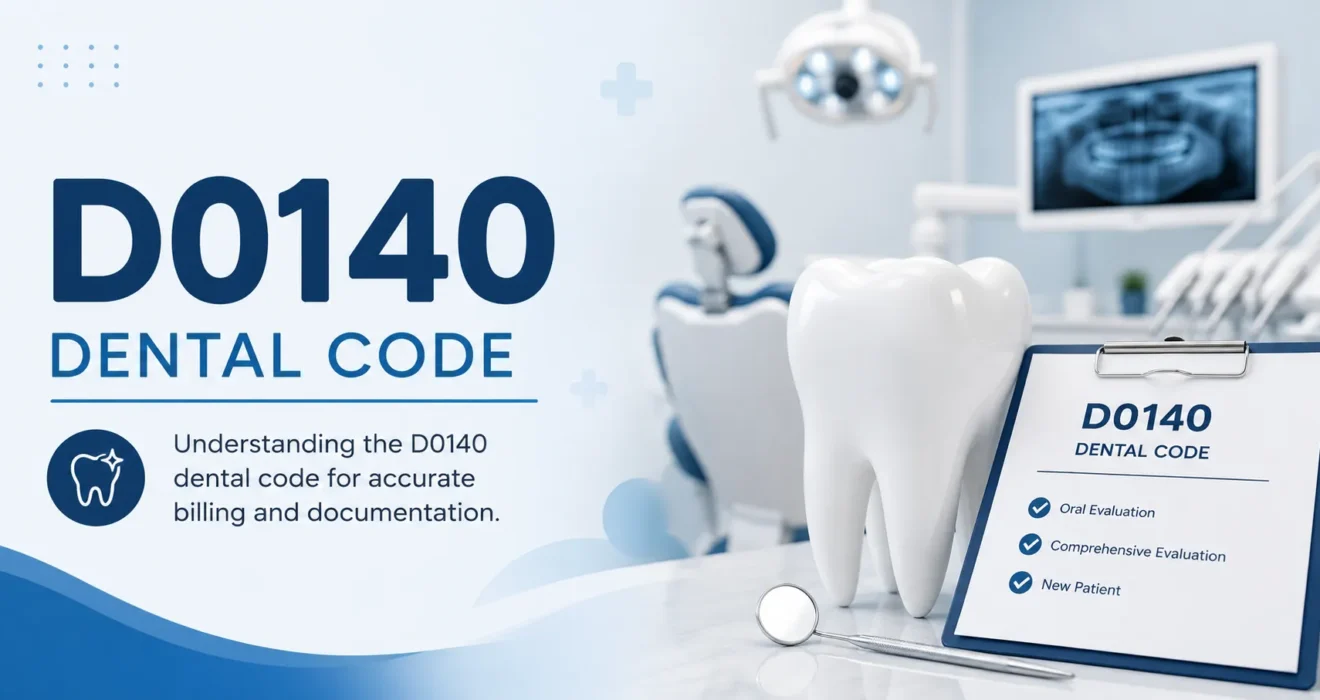
Dental billing can feel like a maze of letters and numbers, and the D0140 dental code is one of the most frequently used yet misunderstood entries in that maze. This code applies whenever a patient walks in with one specific problem rather than a routine check-up. Front desk teams, billers, and even patients often ask what it covers and why it matters for reimbursement. Getting it right protects practice revenue and keeps insurance claims moving smoothly. This guide breaks the code down in plain language, compares it to similar codes, and shares practical tips so your practice can use it with confidence every single time.
What Is the D0140 Dental Code? A Complete Breakdown
The D0140 dental code represents a “limited oral evaluation – problem focused” under the Current Dental Terminology (CDT) system maintained by the American Dental Association. Dentists apply this code when a patient arrives with a single, specific complaint rather than coming in for a routine check-up. A sudden toothache, a chipped front tooth, or unexplained gum swelling are classic examples of situations that call for this type of visit.
Unlike a periodic or comprehensive exam, this evaluation does not require the dentist to assess the entire mouth. Instead, the clinician zeroes in on the area causing discomfort, gathers relevant history, and forms a diagnosis quickly. This narrower scope makes the visit faster for the patient and more efficient for the practice, while still meeting the documentation standards insurers expect.
Many patients first encounter this code after an unplanned dental visit, such as an emergency appointment for pain or trauma. Because the evaluation is problem-driven, the dentist may order a targeted X-ray of the affected tooth rather than a full series of images. The findings are recorded separately from any treatment that follows, since the exam itself is billed independently of fillings, extractions, or other procedures.
It’s worth noting that the D0140 dental code is not meant to replace a periodic evaluation (D0120) or a comprehensive evaluation (D0150). Practices that misuse the code by applying it to routine visits risk claim denials and possible compliance issues with payers. Used correctly, however, it gives dentists a precise way to document and bill for focused, problem-specific care.
Pediatric and general dentistry offices alike rely on this code regularly, particularly for walk-in or same-day emergency visits. Its straightforward purpose, addressing one concern at a time, makes it one of the most practical tools in everyday dental billing.
When Should Your Dentist Use the D0140 Dental Code?
Typical Clinical Scenarios
A dentist reaches for the D0140 dental code whenever a patient’s visit centers on a single, identifiable issue instead of a general wellness check. Recognizing these situations helps front-office staff code claims accurately from the start.
Common scenarios where this code applies include:
- Sudden or severe tooth pain with no scheduled follow-up exam
- A cracked, chipped, or broken tooth from an accident or injury
- Swelling, abscess, or signs of localized infection
- A loose or dislodged filling or crown causing discomfort
- A suspicious lesion, sore, or unusual spot inside the mouth
When It Should Not Be Used
It is just as important to know when this code does not apply. The evaluation should never substitute for a full-mouth assessment, and it should not be billed alongside a comprehensive exam performed on the same date for the same concern. Dentists should also avoid using it simply because a patient is new to the practice; new patients without an urgent complaint typically receive a comprehensive evaluation instead.
Why Accurate Use Matters
Choosing the right code at the point of care reduces the chance of a denied claim later. Documentation that clearly matches the patient’s chief complaint to the limited, problem-focused nature of the visit gives insurers exactly what they need to approve payment without delay.
D0140 vs. D0120 vs. D0150: Key Differences Explained
Confusion often arises because several CDT codes describe oral evaluations, and each one serves a distinct purpose. Here is how the three most commonly compared codes differ:
- D0120 – Periodic Oral Evaluation: Used for an established patient’s routine, recurring check-up, typically performed every six months to monitor overall oral health.
- D0140 – Limited Oral Evaluation, Problem Focused: Applied when a patient presents with one specific complaint, such as pain or trauma, rather than a general check-up.
- D0150 – Comprehensive Oral Evaluation: Reserved for new patients or established patients receiving a complete, detailed assessment of the entire mouth, often including a full health history review.
Each code reflects a different scope of clinical attention. A periodic evaluation assumes the dentist already has a baseline understanding of the patient’s mouth. A comprehensive evaluation builds that baseline from scratch. The D0140 dental code sits apart from both because it is triggered by symptoms, not by a scheduling cycle or a first visit.
Insurance carriers track these distinctions closely, and many plans place frequency limits on D0120 and D0150 within a benefit year. Because D0140 addresses unscheduled problems, it generally falls outside those routine frequency restrictions, which is precisely why accurate coding matters so much for both the practice and the patient’s benefits.
How Insurance Reimbursement Works
Coverage Generally Varies by Plan
Reimbursement for the D0140 dental code depends heavily on the specific dental insurance plan and the documented reason for the visit. Most PPO and indemnity plans cover this evaluation when medical necessity is clearly demonstrated, though copays and coverage percentages differ from one carrier to another.
What Insurers Typically Require
Payers generally expect the following before approving a claim:
- A clear chief complaint recorded in the patient’s chart
- Clinical findings that support the problem-focused nature of the visit
- Any supporting radiographs tied to the specific area examined
- A diagnosis or treatment recommendation linked to the complaint
Maximizing Approval Rates
Practices that train front-office staff to capture detailed notes at check-in see fewer claim rejections. When a denial does occur, an appeal that includes additional clinical detail and a clear explanation of medical necessity often resolves the issue. Tracking outstanding claims through regular accounts-receivable reviews also helps practices catch and correct coding errors before they affect cash flow.
Common Billing Mistakes to Avoid With the D0140 Dental Code
Even experienced billing teams occasionally misstep with this code, and small errors can lead to denied or delayed claims. Avoiding these frequent pitfalls keeps revenue cycles healthy.
- Using D0140 for routine visits: This code is never appropriate for a standard six-month check-up; it should be reserved strictly for problem-focused encounters.
- Billing it alongside D0150 for the same complaint: Insurers will likely reject one of the two claims if both describe the same issue on the same date.
- Skipping detailed documentation: Vague notes like “patient has pain” rarely satisfy payer requirements; specificity about location, duration, and severity matters.
- Forgetting to link radiographs to the complaint: Any X-rays taken should clearly relate to the limited evaluation, not appear as an unrelated, unexplained charge.
- Ignoring plan-specific frequency rules: Some insurers still apply limits to problem-focused evaluations, so verifying benefits beforehand prevents surprises.
Practices that build a quick internal checklist around these five points tend to see noticeably fewer denials. A few extra minutes of documentation at the time of service can save hours of appeals work later.
Final Thoughts
The D0140 dental code exists for one clear reason: to capture problem-focused care accurately and fairly. It is not a substitute for routine or comprehensive evaluations, but it is essential for the unplanned visits that make up a meaningful share of any dental practice’s daily schedule. Understanding when to apply it, how it compares to related codes, and what insurers expect to see in the documentation makes the difference between smooth reimbursement and frustrating denials.
Dental teams that train staff on these distinctions, keep documentation specific, and double-check claims before submission put themselves in the best position for consistent, timely payment. Mastering a single code like this one might seem like a small detail, but in dental billing, those small details add up to a healthier revenue cycle and a smoother experience for both the practice and the patient.