Dental Code D0120 Explained: The Complete Billing and Patient Guide
Anyone who has looked closely at a dental bill has probably seen a string of codes next to simple words like “exam” or “check-up.” One of the most common entries on that bill is dental code D0120. This short code carries a lot of meaning for both patients and dental practices, since it determines how a visit is documented, billed, and reimbursed by insurance.
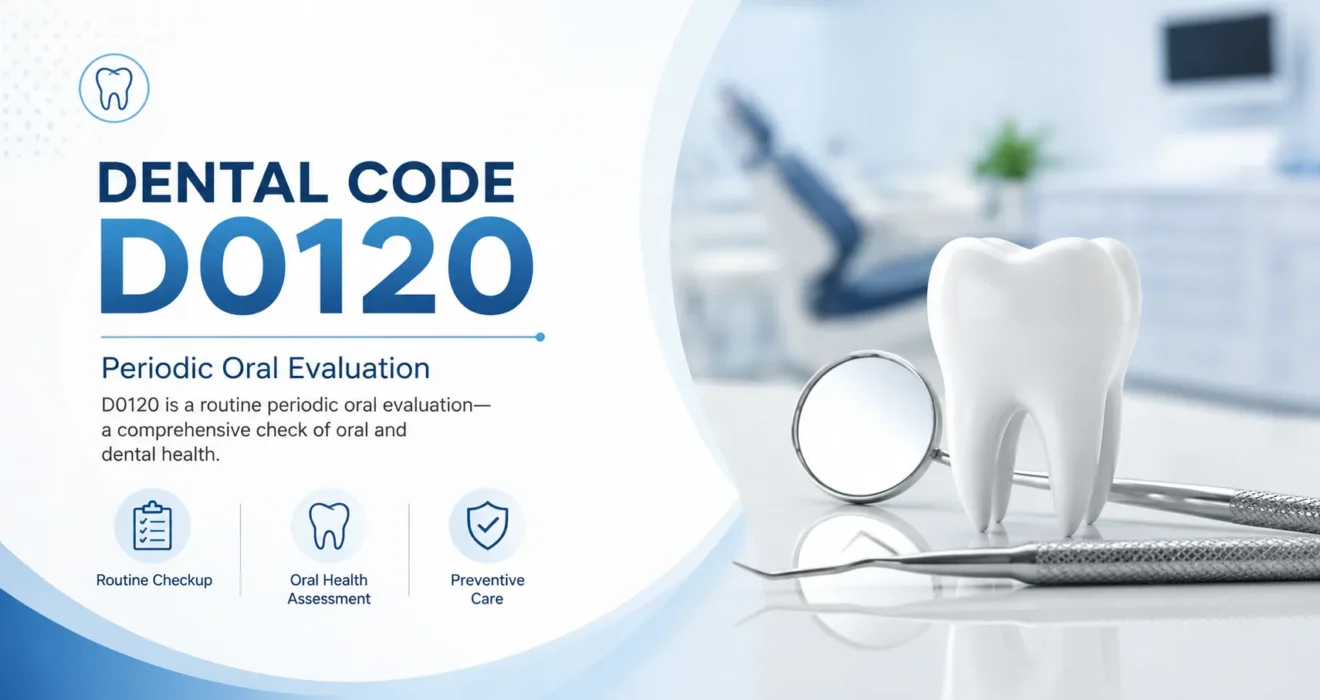
D0120 stands for a periodic oral evaluation for an established patient. In plain terms, it is the code dentists use for a routine recall check-up rather than a first-time visit. Understanding this code helps patients make sense of their statements and helps front-office staff avoid costly claim denials.
This guide breaks down everything worth knowing about D0120, from its clinical meaning to its place in the insurance reimbursement process, in a format that is easy to scan and even easier to apply.
What Is Dental Code D0120?
Dental code D0120 belongs to the Current Dental Terminology (CDT) system, a standardized set of codes maintained by the American Dental Association. This system gives every dental procedure a unique number so that practices, insurers, and patients are all speaking the same language when a claim moves through the billing pipeline.
The code itself refers to a periodic oral evaluation performed on an established patient. An “established patient” simply means someone who has already had a comprehensive first exam with that dentist or practice. So D0120 is reserved for the follow-up visits that happen after the relationship with the dentist has already begun, not for someone walking in for the very first time.
During this visit, the dentist checks for any changes in the patient’s oral and general health since the last appointment. That includes looking for new cavities, watching for signs of gum disease, and reviewing whether prior treatment plans are still on track. It is a snapshot comparison, measuring today’s mouth against the baseline established earlier.
Most dental insurance plans treat D0120 as a preventive service, which is good news for patients. Preventive care is typically covered at a high percentage, often close to full coverage, because catching problems early saves insurers money down the road. This is part of why dentists are encouraged to use this exact code rather than a vague placeholder when billing for a routine check-up.
The frequency of D0120 visits usually lines up with the standard twice-a-year recall schedule that most people associate with “going to the dentist.” However, the exact limit on how often this code can be billed depends on the specific insurance plan, and some plans allow only one periodic evaluation per calendar year rather than two.
It is worth noting that D0120 is distinct from a deep diagnostic workup. It is a recurring health check, not a brand-new investigation, which is exactly why it carries a different code and a different reimbursement rate than a first-time comprehensive exam.
What Does a D0120 Evaluation Actually Include?
A periodic oral evaluation is not just a quick glance inside the mouth. The CDT guidelines spell out specific components that need to happen during this visit for the code to be used correctly.
Core Components of the Visit
Dentists generally perform the following during a D0120 appointment:
- A review of the patient’s updated medical and dental history
- A soft tissue evaluation, which is essentially a screening for oral cancer
- A periodontal screening to check the health of the gums, where clinically indicated
- A visual check for new or progressing tooth decay
- An assessment of existing restorations, such as fillings or crowns, to confirm they are holding up well
Why the Soft Tissue Check Matters
The oral cancer screening built into D0120 is one of the most important parts of the visit, even though it often goes unnoticed by patients. Because oral cancers can develop without obvious symptoms in the early stages, this routine check during a “simple” recall exam can be the difference between catching something early and missing it until it becomes serious.
What Is Usually Excluded
D0120 does not automatically include:
- X-rays, which are billed under separate radiographic codes
- A teeth cleaning, which falls under prophylaxis codes like D1110
- Treatment for an active dental problem the patient is complaining about, which may shift the visit into a different evaluation code entirely
Because the evaluation and the cleaning are billed separately, patients sometimes see two line items for what felt like one single appointment. That is completely normal and reflects how CDT coding separates the diagnostic work from the hygiene work.
D0120 vs. D0140 vs. D0150: Knowing the Difference
Confusing D0120 with its closest relatives is one of the most common coding mistakes in a dental office, and it is also one of the most common points of confusion for patients reading an insurance statement. Here is how the three codes are meant to be used.
A Quick Comparison
- D0120 – Periodic Oral Evaluation (Established Patient): Used for a routine recall visit with a patient the practice has already seen before.
- D0140 – Limited Oral Evaluation (Problem Focused): Used when a patient comes in specifically because of one isolated issue, such as a toothache or a broken filling, rather than for a general check-up.
- D0150 – Comprehensive Oral Evaluation (New or Established Patient): Used for a deeper, first-time evaluation, typically when a patient is new to the practice or returning after a long gap, and it usually involves a full review of the mouth, including charting and a broader health history intake.
Why the Distinction Matters
Choosing the wrong code among these three is not just a paperwork issue. It can lead to claim denials, delayed reimbursements, or even compliance flags if a pattern of incorrect coding shows up during an insurance audit.
The safest approach is to match the code to what actually happened in the chair, not to what generates the highest reimbursement. If a routine recall visit uncovers a specific new complaint, that visit might justify a different code than a straightforward periodic check-up, and documentation should reflect exactly what was assessed and why.
How Insurance Coverage and Billing Work for D0120
Because D0120 sits in the preventive care category, it tends to be one of the more reliably covered codes on a dental benefits plan. Still, coverage details vary enough between insurers that it pays to understand the basic mechanics.
Coverage Frequency Limits
Most insurance plans allow two periodic oral evaluations per calendar year, generally spaced about six months apart. Some plans are stricter and only allow one per year, while others measure the gap in days rather than by calendar year, which can create confusion if a patient switches plans mid-year.
Coordination of Benefits
Patients with two dental insurance plans, such as coverage through a spouse and an employer, need claims coordinated properly so the primary plan pays first and the secondary plan covers any remaining balance. Skipping this step is a common reason claims get kicked back for correction.
Common Reasons D0120 Claims Get Denied
- The visit happened too soon after the previous periodic evaluation, violating frequency limits
- The wrong evaluation code was submitted for what actually took place during the visit
- Missing documentation when the insurer specifically requests supporting clinical notes
- The patient’s coverage had lapsed or changed without the practice’s billing system being updated
What Patients Can Do
Patients who want to avoid a surprise bill should verify their benefits before scheduling, especially if they have switched dental plans recently or are unsure how many cleanings their plan covers per year. A quick phone call to the insurer or the dental office’s billing coordinator usually clears this up in minutes.
Documentation and Compliance Best Practices for D0120
Dental practices that consistently bill D0120 correctly tend to follow a few core habits. These practices protect the office from denied claims and protect patients from unexpected charges.
Steps for Accurate D0120 Coding
- Confirm the patient is truly an established patient before applying this code rather than D0150
- Document the soft tissue and periodontal screening findings clearly in the chart, even when results are normal
- Record any changes in medical history since the last visit, since this is part of what the code requires
- Cross-check the patient’s insurance frequency limits before submitting the claim
- Attach supporting clinical notes proactively if the payer has a history of requesting extra documentation for this code
Why Documentation Protects Everyone
Thorough notes are not just busywork. They give the practice a defensible record if an insurer ever questions a claim, and they protect patients by creating a clear health history that can be referenced at future visits. Good documentation today prevents disputes tomorrow.
Training the Front Office
Staff who handle scheduling and billing benefit from periodic refreshers on the difference between D0120, D0140, and D0150. A quick internal training session, paired with a one-page coding cheat sheet at the front desk, can meaningfully reduce avoidable claim rejections over the course of a year.
Conclusion
Dental code D0120 might look like just another entry on a billing statement, but it represents something patients genuinely benefit from: a consistent, twice-a-year health check that can catch problems while they are still small and manageable. For dental practices, using this code correctly is just as important as performing the exam itself, since accurate coding keeps reimbursement smooth and claim denials rare.
Patients who understand what D0120 covers, and how it differs from related codes like D0140 and D0150, are better equipped to read their insurance statements with confidence. Dental teams who document these visits thoroughly protect both their revenue cycle and their patients’ long-term oral health records.
Whether you are sitting in the dentist’s chair or working the front desk, knowing the story behind a simple four-character code like D0120 makes the entire dental visit experience a little less mysterious and a lot more manageable.