Veneer Teeth Shaving: Everything You Need to Know Before Getting Dental Veneers
Are you dreaming of a flawless, camera-ready smile? Dental veneers are one of the most popular cosmetic dentistry solutions available today — but before you commit, there is one critical step you need to understand: veneer teeth shaving. This process, also called tooth preparation or enamel reduction, is the foundation of the veneer procedure. It permanently alters your natural teeth, which is why being fully informed before you sit in that dental chair is absolutely essential. Whether you are considering porcelain veneers, composite veneers, or the newer no-prep options, this guide breaks down everything — from what veneer teeth shaving actually involves to the risks, costs, aftercare, and smart alternatives. Let’s dive deep so you can make the most confident, well-informed decision for your smile.
What Is Veneer Teeth Shaving and Why Does It Matter?
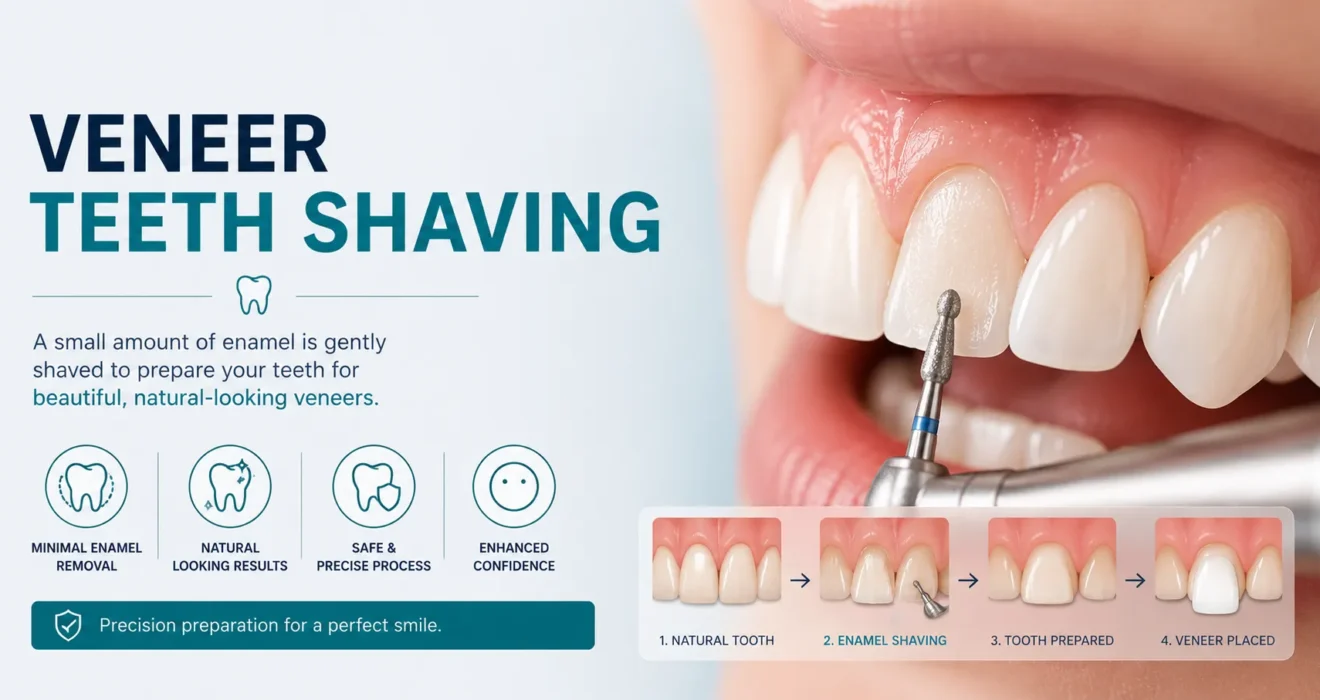
Veneer teeth shaving is the preparatory dental procedure in which a dentist removes a thin layer of enamel from the front surface of your teeth before bonding veneers onto them. This step is necessary for most traditional veneer applications because it creates a rough surface for better adhesion and ensures the veneer sits flush with your surrounding teeth — so the final result looks completely natural rather than bulky or oversized.
The process is performed using a dental drill or rotary tool. Your dentist carefully buffs away a very precise amount of enamel, typically ranging from 0.3 to 0.7 millimeters. While that may sound like a tiny amount, enamel is irreplaceable. Once it is removed, it does not grow back. This irreversibility is what makes the veneer teeth shaving process one of the most debated aspects of cosmetic dentistry today.
Understanding veneer teeth shaving is not just a matter of curiosity — it directly affects your long-term oral health. The enamel on your teeth acts as a protective shield. Reducing it makes your teeth more sensitive and permanently dependent on some form of covering. For this reason, patients who undergo veneer teeth shaving are generally committed to having veneers or crowns on those teeth for life.
This procedure is performed under local anesthetic in most cases to minimize discomfort. Dentists take impressions of the shaved teeth to create custom veneers in a dental laboratory, and temporary veneers are placed while you wait. The entire process — from shaving to final bonding — typically takes two to three dental visits spread across several weeks.
Knowing what veneer teeth shaving truly entails empowers you to weigh cosmetic benefits against permanent biological changes. The decision should never be taken lightly, no matter how attractive the final smile may appear on social media or in celebrity transformations.
How Much Enamel Is Removed During Veneer Teeth Shaving?
The Measurement Breakdown
The amount of enamel removed during veneer teeth shaving varies depending on the type of veneer being used and the individual anatomy of each tooth. Here is a general breakdown:
- Traditional porcelain veneers: 0.5 to 0.7 mm of enamel removed
- Composite veneers: 0.3 to 0.5 mm of enamel removed
- Minimal-prep veneers (e.g., Lumineers): 0.1 to 0.3 mm or sometimes none at all
- No-prep veneers: Zero enamel removal in ideal cases
Why the Exact Amount Matters
Even a fraction of a millimeter is significant when it comes to tooth enamel. Human tooth enamel averages only about 2.5 mm at its thickest point on the biting surface and much less on the facial (front-facing) surface. Removing even 0.5 mm from the front represents a substantial percentage of the total enamel thickness in that area.
Factors That Influence How Much Is Shaved
- The thickness and initial size of your natural teeth
- The material and brand of veneer being applied
- Whether the teeth are already slightly misaligned or discolored
- The aesthetic goal — natural look vs. dramatic transformation
- The skill and technique of your cosmetic dentist
What Happens If Too Much Is Removed?
Over-shaving is a real risk, especially with inexperienced practitioners. If too much enamel is removed, patients can experience:
- Permanent tooth sensitivity to hot and cold
- Increased risk of tooth decay beneath the veneer
- Structural weakness of the tooth
- Nerve damage in severe cases
- Pain during and after the procedure
The Step-by-Step Process of Veneer Teeth Shaving
Consultation and Planning
Before any shaving occurs, your dentist will conduct a thorough consultation. Digital smile design, X-rays, and physical examinations help determine the best approach. This step is where your cosmetic goals are matched against what is biologically possible and safe.
Anesthesia Administration
Local anesthesia is applied to the treatment area before veneer teeth shaving begins. This numbs the teeth and surrounding gum tissue, ensuring the process is pain-free during the procedure. Most patients feel little to no discomfort at this stage.
The Shaving Procedure
Your dentist uses a fine-grit dental burr or diamond rotary instrument to carefully remove the predetermined amount of enamel from the front surface of each tooth. The sides and sometimes the biting edge may also be lightly reshaped depending on the veneer design.
The dentist works with precision instruments and magnification tools to ensure uniform enamel removal. This stage requires expertise — consistency in shaving depth is critical for proper veneer fit.
Impressions and Temporary Veneers
Once the shaving is complete, your dentist takes detailed impressions or digital scans of the prepared teeth. These are sent to a dental laboratory where your custom veneers are fabricated. In the meantime, temporary veneers are bonded to your shaved teeth to protect them and maintain appearance during the waiting period, which can last one to three weeks.
Final Bonding
When your permanent veneers arrive, the temporary ones are removed, and the new veneers are checked for fit, color, and shape. Final adjustments are made before the veneers are permanently bonded using dental cement and cured with a special light. Your bite is then carefully checked and refined.
Veneer Teeth Shaving — Risks and Side Effects You Must Know
One of the most important conversations to have with your dentist before undergoing veneer teeth shaving is about the risks involved. While this procedure is routine and generally safe when performed by a qualified professional, it is not without potential complications.
Permanent sensitivity is among the most commonly reported side effects. Because enamel serves as the primary insulator between the outside world and the sensitive inner dentin and pulp of the tooth, thinning it can cause sharp sensitivity to temperature, sweet foods, and acidic beverages. This sensitivity may fade over time once the veneer is bonded but can be permanent in some cases.
Irreversibility is the most significant risk from a long-term oral health perspective. Veneer teeth shaving cannot be undone. Once enamel is gone, it is gone permanently. This means patients are committing not just to veneers but to a lifetime of some form of dental covering on those teeth. Future replacements, repairs, or upgrades become a lifelong responsibility.
Veneer failure and decay are also worth discussing. If a veneer chips, cracks, or falls off — which does happen over time — the exposed, shaved tooth beneath is vulnerable to decay and bacterial infection. Without prompt dental attention, this can lead to root canal treatment or even tooth extraction.
Gum irritation and recession around the veneer margins are other complications that can arise if veneers are not precisely fitted. Poor marginal seals allow bacteria to infiltrate, contributing to gum disease and bone loss over time.
No-Prep Veneers vs. Traditional Veneer Teeth Shaving — Key Differences
What Are No-Prep Veneers?
No-prep veneers, such as Lumineers or Vivaneers, are ultra-thin porcelain shells designed to be bonded directly onto the front surface of teeth with little to no enamel removal. They have become increasingly popular among patients who want cosmetic improvement without the permanence of traditional veneer teeth shaving.
Side-by-Side Comparison
| Feature | Traditional Veneers | No-Prep Veneers |
|---|---|---|
| Enamel Removal | 0.5–0.7 mm | 0–0.3 mm |
| Reversibility | No | Sometimes |
| Thickness | Thinner veneer possible | Ultra-thin |
| Longevity | 10–20 years | 5–15 years |
| Best for | Discoloration, chips, gaps | Minor cosmetic issues |
| Cost | Higher | Comparable or slightly lower |
Who Is a Good Candidate for No-Prep Veneers?
- Patients with naturally small or slightly recessed teeth
- Those seeking a reversible or trial cosmetic option
- Patients with minor staining or mild spacing issues
- Those with a low pain threshold or dental anxiety
Limitations of No-Prep Veneers
No-prep veneers are not suitable for everyone. In cases of severe discoloration, significant misalignment, or larger teeth, the veneer will appear bulky if placed without shaving. Traditional veneer teeth shaving remains the more predictable and cosmetically superior option in complex cases.
How to Care for Your Teeth After Veneer Teeth Shaving
Aftercare following veneer teeth shaving is vital — both during the temporary veneer phase and after your permanent veneers are placed. Proper maintenance extends the life of your veneers significantly and protects your underlying tooth structure.
During the Temporary Veneer Phase
- Avoid hard, crunchy, or sticky foods that could dislodge temporary veneers
- Use a soft-bristled toothbrush and gentle, non-abrasive toothpaste
- Be cautious with very hot or very cold beverages, as shaved teeth are more sensitive
- Rinse with an alcohol-free mouthwash to keep bacteria at bay
- Avoid biting fingernails or using teeth as tools
Long-Term Veneer Care
- Brush twice daily using non-abrasive fluoride toothpaste
- Floss daily, carefully working around the veneer margins
- Wear a night guard if you grind your teeth (bruxism accelerates veneer wear)
- Avoid staining beverages like coffee, red wine, and tea — or rinse promptly after consuming them
- Schedule professional cleanings every six months
- Never bite into extremely hard foods like ice, hard candy, or crusty bread directly with veneered teeth
Cost of Veneer Teeth Shaving and the Full Veneer Procedure
What Does the Total Investment Look Like?
The cost of veneer teeth shaving is typically bundled into the overall veneer procedure cost rather than billed separately. Here is what patients can generally expect:
- Porcelain veneers: $900 to $2,500 per tooth in the United States
- Composite veneers: $300 to $900 per tooth
- No-prep veneers (e.g., Lumineers): $800 to $2,000 per tooth
- Full smile makeover (8–10 teeth): $8,000 to $20,000+
Does Insurance Cover Veneer Teeth Shaving?
In most cases, dental insurance does not cover veneers or veneer teeth shaving because they are classified as cosmetic procedures. However, if veneers are being placed to repair a cracked or damaged tooth, partial coverage may apply. Always verify with your insurance provider before proceeding.
Financing Options
Many cosmetic dentists offer payment plans through third-party healthcare financing companies. Options such as CareCredit or Lending Club Patient Solutions allow patients to spread the cost over 12 to 24 months, often with low or no interest promotional periods.
How to Choose the Right Dentist for Veneer Teeth Shaving
Choosing the right cosmetic dentist for your veneer teeth shaving procedure is arguably the most important decision in this entire journey. The skill of the dentist directly determines the outcome — both cosmetically and health-wise.
Look for board certification and cosmetic dentistry training. While all general dentists are technically qualified to place veneers, those with additional training in cosmetic procedures from accredited academies will have a higher level of precision and artistry.
Review before-and-after portfolios. Ask to see real patient photos from your prospective dentist. Pay attention to cases similar to yours in terms of tooth color, spacing, and desired outcome.
Seek consultations from multiple dentists. Different professionals will offer different treatment plans. This comparison helps you understand the range of approaches and prices available, and it builds your confidence in your final choice.
Ask specific questions about veneer teeth shaving. How much enamel will be removed? Why? What veneer material do they recommend for your case? What happens if a veneer fails in five years? A dentist who answers these questions clearly and thoroughly is one worth trusting.
Check patient reviews and third-party ratings. Online reviews on Google, Yelp, and dental-specific platforms like Zocdoc provide real insights from real patients about communication, outcomes, and follow-up care quality.
Conclusion
Veneer teeth shaving is a transformative — but permanent — cosmetic dental procedure that demands careful thought, thorough research, and trust in a highly qualified professional. From understanding exactly how much enamel is removed to knowing the difference between traditional and no-prep veneers, being informed is your greatest asset. The benefits of a confident, radiant smile are real and life-changing for many people. But so are the long-term responsibilities that come with irreversible enamel reduction.
If you are considering veneers, start with a consultation from a certified cosmetic dentist, ask every question you have, and never rush the decision. Your natural teeth are irreplaceable — and a truly great smile is one built on a foundation of knowledge, not just aesthetics. With the right information and the right dental team, veneer teeth shaving can be the gateway to the smile you have always wanted, done safely and beautifully.