Severe Periodontal Disease: Causes, Symptoms, Stages, and the Best Treatment Options
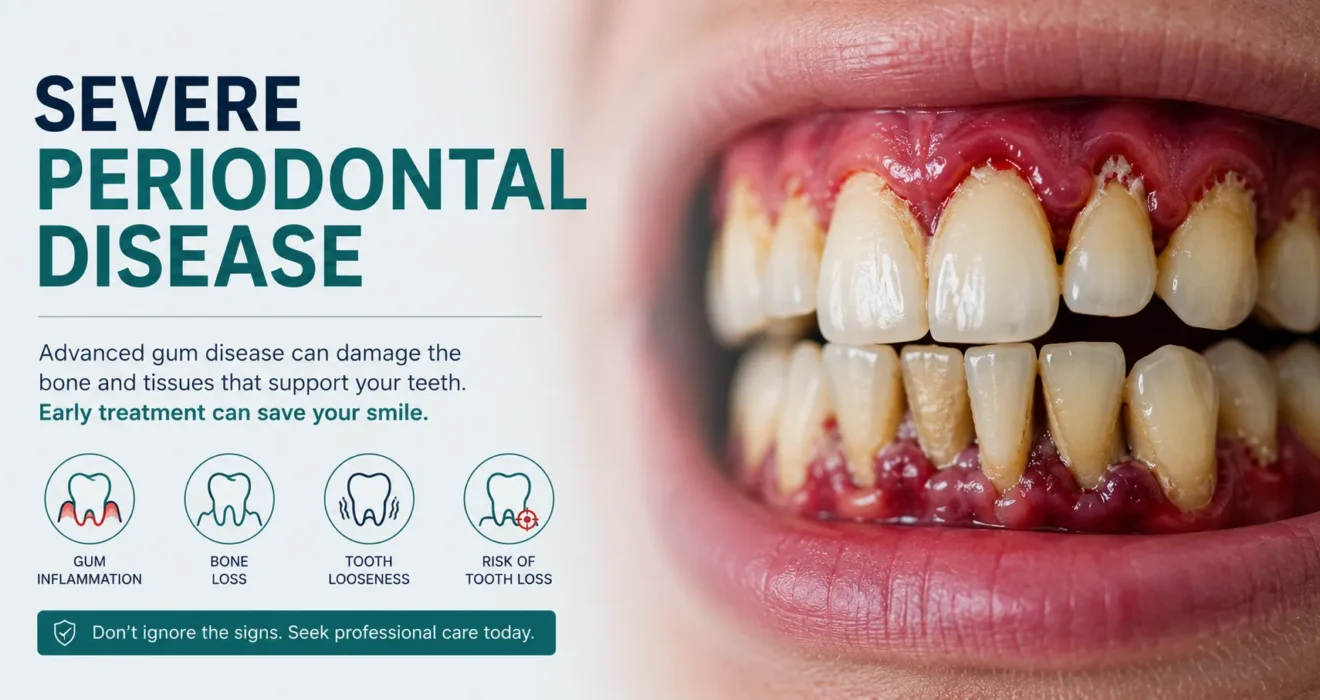
Severe periodontal disease is one of the most common yet most overlooked dental health conditions affecting millions of people worldwide. Often starting as mild gum inflammation, it can silently progress into a destructive infection that damages the soft tissue, destroys the bone supporting your teeth, and — if left untreated — leads to permanent tooth loss. What makes this condition particularly alarming is that it does not just affect your mouth. Research has increasingly linked severe periodontal disease to serious systemic conditions including heart disease, diabetes, and respiratory illness. Understanding the warning signs, causes, and treatment options is the first and most powerful step toward protecting both your oral and overall health.
What Is Severe Periodontal Disease and Why Should You Be Concerned?
Periodontal disease, commonly known as gum disease, is a bacterial infection that affects the structures surrounding and supporting your teeth — including the gums, the periodontal ligament, and the alveolar bone. The condition exists on a spectrum, beginning with gingivitis (the mildest and reversible form) and advancing through early, moderate, and finally severe periodontal disease, also called advanced periodontitis.
At the severe stage, the infection has caused significant bone loss, deep periodontal pockets (typically 6mm or more), and extensive tissue damage. Teeth become loose, shift out of position, or fall out entirely. The bacteria responsible for this destruction can also enter the bloodstream, contributing to inflammation throughout the body.
Severe periodontal disease is not a condition that happens overnight. It is the result of years of bacterial accumulation, chronic inflammation, and — in many cases — inadequate dental care. Understanding how it develops is essential for prevention and early intervention.
According to the Centers for Disease Control and Prevention (CDC), nearly 47.2% of adults aged 30 years and older have some form of periodontal disease. For adults aged 65 and older, that number rises to 70.1%. These statistics make severe gum disease one of the most prevalent chronic infections in adults globally — and one of the most preventable.
Despite its prevalence, many people are unaware they have it. Pain is not always present in the early to moderate stages, and visible deterioration can be subtle. By the time most patients seek treatment for severe periodontal disease, significant and often irreversible damage has already occurred.
The Root Causes of Severe Periodontal Disease
Understanding what drives severe periodontal disease helps patients and caregivers take targeted action before the condition advances.
The Role of Plaque and Bacteria
The primary cause of periodontal disease is dental plaque — a sticky, colorless film of bacteria that constantly forms on teeth and gumlines. When plaque is not removed through regular brushing and flossing, it hardens into tartar (calculus), which can only be removed by a dental professional. The bacteria within plaque and tartar produce toxins that irritate and inflame gum tissue, triggering the immune system’s inflammatory response. Over time, this chronic inflammation destroys the connective tissue and bone that hold teeth in place.
Risk Factors That Accelerate Disease Progression
Not everyone with plaque buildup will develop severe periodontal disease. Several risk factors accelerate its progression:
- Smoking and tobacco use — Smoking is one of the most significant risk factors. It impairs blood flow to gum tissue, reduces the immune response, and makes treatment less effective.
- Diabetes — People with poorly controlled diabetes have a higher risk of severe gum disease due to elevated blood sugar levels that feed bacterial growth and impair healing.
- Genetics — Some individuals are genetically predisposed to more aggressive forms of periodontal disease, even with good oral hygiene habits.
- Hormonal changes — Pregnancy, menopause, and puberty can increase gum sensitivity and susceptibility to infection.
- Medications — Certain drugs, including antihypertensives, antidepressants, and anticonvulsants, cause dry mouth or gum overgrowth that promotes bacterial accumulation.
- Nutritional deficiencies — Low vitamin C intake, for example, weakens gum tissue integrity and slows healing.
- Stress — Chronic stress suppresses the immune system, making the body less effective at fighting off periodontal bacteria.
- Poor oral hygiene — Infrequent or ineffective brushing and flossing allows plaque to build up unchecked.
Systemic Diseases and Severe Periodontal Disease
Severe periodontal disease does not exist in isolation. It shares a bidirectional relationship with several systemic conditions. Cardiovascular disease, for instance, has been strongly associated with periodontitis — the same inflammatory pathways that destroy gum tissue can also contribute to arterial inflammation and atherosclerosis. Similarly, poorly controlled diabetes worsens gum disease, and severe periodontal disease, in turn, makes blood sugar harder to manage.
Other systemic connections include:
Respiratory disease — bacteria from periodontal infections can be aspirated into the lungs, contributing to pneumonia and worsening chronic obstructive pulmonary disease (COPD).
Adverse pregnancy outcomes — severe gum disease has been linked to premature birth and low birth weight.
Rheumatoid arthritis — both conditions share inflammatory mechanisms, and treating one may benefit the other.
Recognizing the Symptoms of Severe Periodontal Disease
Early identification of severe periodontal disease symptoms can mean the difference between saving and losing your teeth.
Common Warning Signs
- Persistent bad breath (halitosis) — Chronic bad breath that does not improve with brushing is a hallmark sign of periodontal infection.
- Bleeding gums — Gums that bleed during brushing, flossing, or even spontaneously indicate active inflammation.
- Swollen, red, or tender gums — Healthy gums are firm and pale pink. Inflamed, puffy, or darkened gums signal infection.
- Receding gums — Gums pulling away from the teeth make teeth appear longer and expose sensitive root surfaces.
- Deep periodontal pockets — Pockets of 6mm or more between the teeth and gums are a diagnostic indicator of advanced disease.
- Loose or shifting teeth — Bone loss from severe periodontal disease causes teeth to loosen, creating gaps or bite changes.
- Pus between teeth and gums — The presence of abscess or pus is a sign of active bacterial infection.
- Pain when chewing — Discomfort during eating may indicate significant tissue or bone damage.
- Changes in bite or denture fit — As teeth shift or are lost, the way teeth fit together changes noticeably.
When to See a Dentist Immediately
Do not wait if you notice loose teeth, visible pus, severe pain, or sudden changes in how your teeth fit together. These symptoms indicate that severe periodontal disease has progressed to a stage requiring urgent professional intervention. Delaying care at this point risks irreversible bone loss and tooth loss.
The Stages of Periodontal Disease — From Gingivitis to Severe Periodontitis
Stage 1 — Gingivitis
Gingivitis is the earliest and only fully reversible stage of gum disease. The gums are inflamed due to plaque buildup but no bone or connective tissue has yet been damaged. Symptoms include redness, swelling, and bleeding during brushing. With professional cleaning and improved home care, gingivitis can be completely resolved.
Stage 2 — Mild Periodontitis
At this stage, the infection has progressed beyond the gumline and begun to damage the bone and connective tissue supporting the teeth. Periodontal pockets measure 4–5mm. Some irreversible bone loss has occurred, but teeth remain stable and treatment is still highly effective.
Stage 3 — Moderate Periodontitis
Bone loss deepens (pockets of 5–6mm), and teeth may begin to show slight mobility. The risk of systemic involvement increases at this stage. Treatment becomes more intensive, often requiring scaling and root planing (deep cleaning) and, in some cases, adjunctive antibiotic therapy.
Stage 4 — Severe Periodontal Disease
This is the most advanced and destructive stage. Periodontal pockets exceed 6mm, bone loss is substantial, and teeth are significantly mobile. Multiple teeth may be lost or require extraction. Complex restorative and surgical interventions are often necessary. The systemic health impact is greatest at this stage.
How Dentists Diagnose Severe Periodontal Disease
Accurate diagnosis guides effective treatment. Dentists use several methods to assess the extent of severe periodontal disease.
Periodontal Probing
A thin instrument called a periodontal probe is gently inserted between each tooth and the gum to measure the depth of the pockets. Healthy pockets measure 1–3mm. Readings of 6mm or more at multiple sites confirm severe periodontitis.
Dental X-Rays
Radiographs reveal the level of bone surrounding the teeth. In severe periodontal disease, significant horizontal or vertical bone loss is visible on X-rays, helping the dentist assess the degree of damage and plan appropriate treatment.
Comprehensive Periodontal Evaluation
A full evaluation includes:
- Bleeding on probing (BOP) — indicates active inflammation
- Tooth mobility assessment — grades looseness from 0 (stable) to 3 (extreme mobility)
- Furcation involvement — checks whether bone loss has extended to where roots of multi-rooted teeth divide
- Recession measurement — documents how far gums have receded from the cemento-enamel junction
Microbiological and Genetic Testing
In some cases, especially for aggressive or treatment-resistant forms of severe periodontal disease, dentists may order saliva or plaque microbiological tests to identify specific bacterial species or genetic tests to assess susceptibility factors. This allows for more targeted antibiotic prescriptions and personalized treatment plans.
Treatment Options for Severe Periodontal Disease
Treatment of severe periodontal disease is multi-phase, often requiring both non-surgical and surgical approaches depending on disease severity.
Non-Surgical Treatments
Scaling and Root Planing (SRP) is the gold standard first-line treatment for periodontitis. This deep-cleaning procedure removes tartar and bacterial deposits from beneath the gumline and smooths the root surfaces to discourage future bacterial adhesion. It is performed under local anesthesia and may require multiple appointments.
Antibiotic Therapy may be prescribed in conjunction with SRP. Options include:
- Locally delivered antibiotics placed directly into periodontal pockets (e.g., doxycycline gel, minocycline microspheres)
- Systemic oral antibiotics (e.g., amoxicillin + metronidazole) for aggressive infections
Antimicrobial Mouth Rinses such as chlorhexidine gluconate are prescribed to reduce bacterial load and support healing post-treatment.
Surgical Treatments for Severe Periodontal Disease
When non-surgical treatment fails to adequately resolve severe periodontal disease — particularly when pockets remain deep or bone loss is extensive — surgery becomes necessary.
- Flap Surgery (Pocket Reduction Surgery) — The gum tissue is folded back to allow direct access to the roots and bone. Tartar deposits are thoroughly removed, and the tissue is sutured back, reducing pocket depth.
- Bone Grafting — Lost bone is replaced using grafting material (autogenous, allograft, xenograft, or synthetic) to regenerate the support structure around teeth.
- Guided Tissue Regeneration (GTR) — A specialized membrane is placed between the bone graft and gum tissue to encourage bone regrowth and prevent the gum from growing into the space.
- Soft Tissue Grafts — Used to cover exposed roots and restore lost gum tissue, reducing sensitivity and improving aesthetics.
- Dental Implants — When teeth cannot be saved, implants offer a permanent solution to replace missing teeth after the infection has been fully controlled.
Laser Therapy
Laser-assisted periodontal therapy (LAPT) is an emerging, minimally invasive approach that uses laser energy to remove diseased tissue and kill bacteria within periodontal pockets. It promotes healing, reduces bleeding, and shortens recovery time compared to traditional surgery. While not yet a universal replacement for conventional procedures, it is increasingly used as an adjunct or alternative for appropriate patients.
Living With and Managing Severe Periodontal Disease Long-Term
Treatment does not end after initial therapy. Managing severe periodontal disease is a lifelong commitment.
Maintenance Therapy
After active treatment, patients with a history of severe periodontal disease require supportive periodontal therapy (SPT) — professional cleanings every 3 to 4 months rather than the standard 6-month interval. This frequency helps control bacterial recolonization before it progresses to re-infection.
Optimizing Home Care
- Brush twice daily with a soft-bristled toothbrush, using the Bass technique to clean along the gumline
- Floss daily or use interdental brushes to clean between teeth where plaque accumulates
- Use a water flosser as an adjunct to traditional flossing, particularly for cleaning deeper pockets
- Rinse with prescribed antimicrobial mouthwash as directed by your periodontist
- Replace your toothbrush every 3 months or after illness
Lifestyle Changes That Support Recovery
Quit smoking. This single change can dramatically improve treatment outcomes for severe periodontal disease. Smokers respond significantly less well to both surgical and non-surgical therapies. Studies show that quitting smoking improves blood flow to the gums, enhances immune response, and accelerates tissue healing.
Manage blood sugar. For diabetic patients, tight glycemic control is critical — both to improve periodontal treatment outcomes and to reduce the systemic complications that uncontrolled diabetes creates.
Reduce stress. Incorporating stress-reduction practices such as exercise, mindfulness, and adequate sleep supports immune function and reduces inflammatory markers throughout the body.
Eat a balanced diet rich in antioxidants, vitamins C and D, and calcium — all nutrients that support gum and bone health.
Can Severe Periodontal Disease Be Prevented?
Prevention is always more effective — and far less costly — than treatment. Severe periodontal disease is largely preventable with consistent effort.
The most powerful preventive measures include:
- Regular dental check-ups — Visit your dentist at least twice a year for professional cleaning and early detection of gum disease at its most treatable stages.
- Daily oral hygiene — Brushing and flossing consistently removes the plaque that drives periodontal disease.
- Addressing gingivitis promptly — Treating early-stage gum inflammation before it progresses to periodontitis is the single most effective way to prevent severe disease.
- Managing systemic conditions — Controlling diabetes, stopping smoking, and addressing nutritional deficiencies all reduce your risk.
- Dental sealants and fluoride — While not directly targeting gum disease, these protect tooth surfaces and reduce the overall bacterial burden in the mouth.
- Staying informed — Understanding your personal risk factors empowers you to take proactive steps with your dental team.
Early intervention not only saves teeth — it protects your overall health, reduces the financial burden of complex treatment, and significantly improves quality of life.
Conclusion
Severe periodontal disease is a serious, progressive infection that extends far beyond the mouth. Left untreated, it silently destroys gum tissue, dissolves supporting bone, loosens and ultimately costs you your teeth — and contributes to systemic illnesses that affect your heart, lungs, and metabolic health. The good news is that with early diagnosis, professional treatment, and a committed oral hygiene routine, severe periodontal disease can be controlled and its damage minimized.
Whether you are currently experiencing symptoms, managing an existing diagnosis, or simply seeking to protect your long-term oral health, the key message is clear: do not ignore your gums. Visit your dentist regularly, address warning signs early, and make the lifestyle choices that support a healthy mouth and a healthy body. Your gums — and your overall health — depend on it.