D7953 Dental Code: Your Complete Ridge Preservation Guide
A tooth extraction does more than remove a problem tooth. It also changes the shape of the bone underneath it. Dentists use the D7953 dental code to bill for a procedure that protects this bone right after extraction. This code matters for clinical planning and for insurance reimbursement alike. Many practices lose revenue simply because they apply the wrong code or skip required documentation. This guide breaks down what D7953 means, when to use it, how it differs from similar codes, and how to submit a clean claim. Whether you work as a dentist, an office manager, or a billing specialist, this guide will help you understand both the procedure and the paperwork behind it.
What Is the D7953 Dental Code?
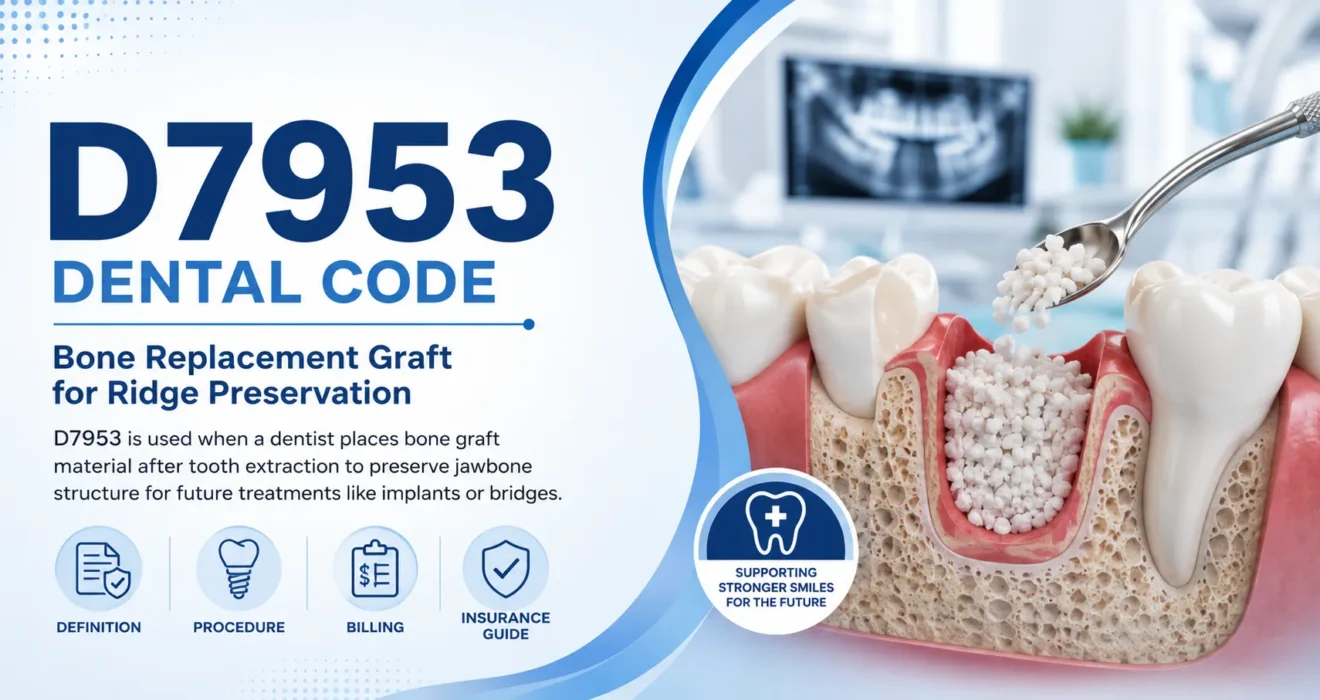
The D7953 dental code identifies a bone replacement graft placed for ridge preservation. Dentists report this code when they place graft material directly into a fresh extraction or implant removal socket. The procedure happens during the same appointment as the extraction, not weeks later. This timing detail separates D7953 from several other bone grafting codes.
The alveolar ridge is the bony ridge that once held the tooth root. After an extraction, this ridge naturally shrinks and reshapes itself over the following months. Left untreated, the socket can lose significant width and height. That bone loss can complicate, or even block, a future implant, bridge, or denture.
Ridge preservation grafting fills the empty socket with bone graft material, sometimes combined with a protective membrane. The graft acts like a scaffold. It holds the socket’s shape while the body slowly heals and rebuilds natural bone around it, keeping the site usable for restorative work later.
D7953 falls under the Oral and Maxillofacial Surgery category of the CDT code set, specifically within the other oral surgery procedures grouping. Insurance payers expect the clinical notes to match this category closely, and vague documentation is one of the most common reasons claims get questioned or denied.
It is worth noting what D7953 does not cover. It does not include the cost of acquiring the graft material itself, since many payers bill that separately under its own line item. It also does not apply to grafts placed weeks after the site has already healed, grafts placed around natural teeth that remain in the mouth, or sinus lift procedures.
Understanding this code accurately protects both the practice and the patient. Correct coding speeds up reimbursement, reduces the risk of an audit, and gives patients a clear picture of what their treatment plan actually involves.
When Should Dentists Use the D7953 Code?
Typical Clinical Scenarios
Dentists typically report D7953 in the following situations:
- A tooth is extracted, and the socket walls are thin or already showing signs of collapse.
- A patient plans to receive a dental implant at that same site within the next several months.
- A removable bridge or denture is planned, and the ridge shape needs to stay intact for a proper fit.
- An existing dental implant is removed, and the surgeon wants to protect the site for a future replacement.
Site-Specific Billing
Payers expect D7953 to be billed per site, meaning each individual socket that receives a graft gets its own reported instance of the code. A patient who has three teeth extracted and grafted in the same visit may generate three separate D7953 entries, one for each location, rather than a single combined charge.
What the Code Does Not Cover
- Grafts placed long after the extraction site has already healed
- Sinus lift procedures, which fall under D7951 or D7952 instead
- Grafting performed around a retained natural tooth, which falls under D4263
D7953 vs Other Bone Graft Codes: Key Differences
A Quick Comparison
- D7953 — Graft placed in a fresh extraction or implant removal socket, billed per site, for ridge preservation.
- D7950 — Structural graft used to rebuild major bone defects in the jaw, often caused by trauma or cysts, unrelated to a recent extraction.
- D7951 — Sinus augmentation graft, used to build vertical bone height in the upper jaw before implant placement.
- D6104 — Graft placed at the same time as implant placement itself, rather than at the time of extraction.
- D4263 — Graft placed around a retained, natural tooth rather than an empty socket.
Why the Difference Matters
Choosing the right code is not just a paperwork formality. Insurance payers process each of these codes differently, and many plans only cover certain ones under specific circumstances. A mismatch between the clinical notes and the billed code is one of the fastest ways to trigger a denial or a payer audit.
How to Document and Bill D7953 the Right Way
Build a Strong Clinical Note
A complete, defensible note generally includes:
Diagnosis and reason for extraction: Explain why the tooth was removed and why ridge preservation is necessary for this patient.
Procedure description: Note the graft material used, whether a membrane was placed, and the exact site treated.
Site identification: Record the specific tooth number or quadrant, since D7953 is billed per site rather than per visit.
Treatment plan context: Mention any planned future restoration, such as an implant or bridge, to justify why the procedure was performed.
Submission Tips
Submit the claim with clear, specific narrative text rather than copying a generic template. Attach pre-operative and post-operative notes whenever the payer allows supporting documents. Always verify the patient’s plan benefits before treatment, since coverage for ridge preservation varies widely between insurers.
Common Reasons D7953 Claims Get Denied
Documentation Gaps
- Missing details about the graft material or membrane used during the procedure
- No clear timing connecting the graft to the extraction date
- Insufficient justification for why ridge preservation was clinically necessary
Coding Mismatches
- Billing D7953 for a site that had already healed before the graft was placed
- Confusing D7953 with D6104 when an implant was placed during the same visit
- Failing to bill per site when multiple sockets received grafts in one appointment
Coverage and Plan Limits
Even a well-documented claim can be denied if the patient’s plan excludes ridge preservation or limits how often it can be billed. Checking benefits before treatment prevents most of these denials and helps set accurate expectations with the patient.
Frequently Asked Questions About D7953
Does D7953 Guarantee Insurance Coverage?
No. Coverage depends entirely on the patient’s individual dental plan. Some insurers treat ridge preservation as a standard part of extraction care, while others classify it as elective or cosmetic and exclude it altogether. Verifying benefits before the procedure remains the safest approach for both the practice and the patient.
Can D7953 Be Billed With an Extraction Code on the Same Day?
Yes, in most cases. The extraction itself is billed separately from the grafting procedure. The two codes work together to describe a single visit that involved both tooth removal and ridge preservation, and payers generally expect to see both line items when ridge preservation happens immediately after extraction.
How Many Times Can D7953 Be Billed in One Visit?
A practice can report D7953 once for every individual site that receives a graft. A patient who has two adjacent teeth removed and grafted would generate two separate entries, each tied to its own tooth number, rather than one combined charge for the whole area.
What Happens if the Graft Site Fails to Heal Properly?
If the graft does not integrate well, the dentist may need to repeat the procedure or pursue an alternative treatment plan. Documenting the original procedure thoroughly makes any follow-up treatment easier to justify and bill correctly, since payers will want to see a clear clinical history connecting the two visits.
Who Typically Performs the D7953 Procedure?
General dentists, oral surgeons, and periodontists all perform ridge preservation grafting, depending on the complexity of the case and the practice’s scope of services. Regardless of who performs the procedure, the documentation standards and coding rules for D7953 remain the same.
Why Accurate Coding Benefits the Whole Practice
Strong coding habits do more than satisfy insurance requirements. They create a paper trail that protects the practice during audits, support continuity of care if a patient switches providers, and give the front desk team confidence when answering patient questions about cost. A practice that consistently codes D7953 correctly also tends to see faster claim turnaround times, since payers spend less time requesting additional information.
Training the entire clinical and administrative team on the difference between D7953 and similar codes pays off over time. New staff members benefit from a simple reference sheet that lists the code, its definition, common scenarios, and required documentation elements side by side. This small investment in training reduces costly coding errors before they ever reach a claim form.
Conclusion
The D7953 dental code plays a specific, valuable role in modern restorative dentistry. It protects the bone right after an extraction, giving patients a stronger foundation for future implants, bridges, or dentures. Dentists who understand exactly when to use this code, and how it differs from similar bone graft codes, submit cleaner claims and face fewer denials. Strong documentation remains the single biggest factor in successful reimbursement. Recording the graft material, the site, the timing, and the treatment plan turns a routine procedure into an easily approved claim. For practices that perform ridge preservation regularly, building a documentation checklist around these details saves time, protects revenue, and keeps the focus where it belongs: on patient care.