
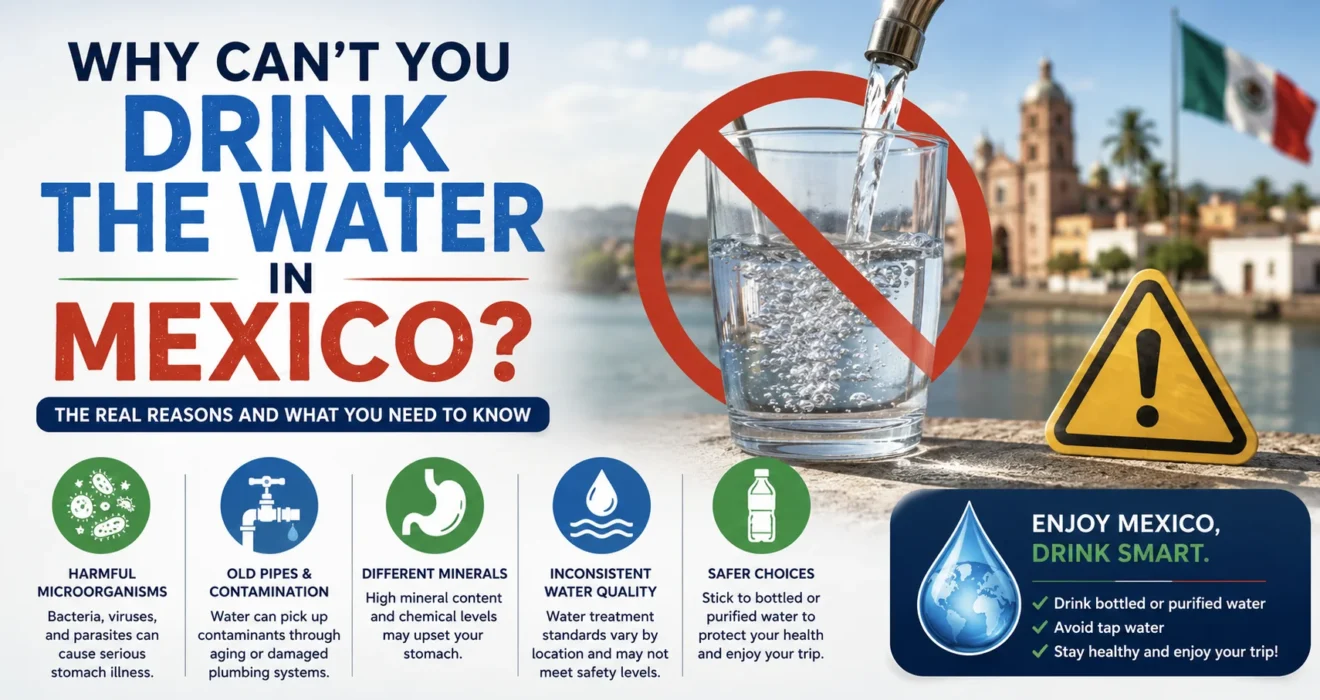
Why Can’t You Drink the Water in Mexico? The Complete Safety Guide
Many travelers planning a vacation to Mexico ask the same question: why can’t you drink the water in Mexico? The concern is so common that it has become one of the most frequently discussed travel safety topics. Mexico welcomes millions of tourists each year, yet many visitors are advised to avoid drinking tap water during their trip.
The issue is not necessarily that all water in Mexico is unsafe. Instead, the concern often relates to water treatment consistency, aging infrastructure, contamination risks, and the fact that travelers may not have immunity to local microorganisms. Even a small amount of contaminated water can lead to digestive problems that can quickly ruin a vacation.
Understanding why water safety varies across Mexico can help travelers make informed decisions and enjoy their trip without unnecessary health concerns. This guide explains everything you need to know about drinking water safety in Mexico, common risks, practical precautions, and the safest ways to stay hydrated while traveling.
Why Can’t You Drink the Water in Mexico?
Mexico’s water quality varies significantly depending on the location, infrastructure, and treatment processes used by local municipalities. While many treatment facilities meet safety standards, problems often occur after water leaves the treatment plant. In some areas, aging pipelines may allow contaminants to enter the water supply before it reaches homes, hotels, or businesses. Broken pipes, leaks, and outdated infrastructure can create opportunities for bacteria and parasites to contaminate otherwise treated water. Many travelers are also sensitive to microorganisms that local residents have adapted to over time. Even water that causes no issues for locals may trigger digestive discomfort in visitors. Another important factor is water storage. Some buildings rely on rooftop tanks or cisterns to store water. If these systems are not properly maintained, contamination can occur regardless of the original water quality. Tourists often encounter unfamiliar bacteria, viruses, and minerals that their bodies are not accustomed to processing. As a result, even relatively safe water may cause mild stomach upset. Because of these factors, health experts generally recommend bottled or purified water for visitors traveling throughout Mexico.
Common Health Risks Associated with Drinking Tap Water
Bacterial Contamination
Several bacteria can be present in contaminated water supplies, including strains that cause gastrointestinal illness.
Viral Infections
Viruses may enter water systems through sewage contamination and inadequate sanitation practices.
Parasitic Organisms
Parasites are among the most concerning contaminants because they can cause prolonged digestive symptoms.
Traveler’s Diarrhea
The most common issue reported by tourists includes:
- Stomach cramps
- Diarrhea
- Nausea
- Vomiting
- Dehydration
Sensitive Digestive Systems
Even when contamination is minimal, travelers may experience discomfort because their digestive systems are not accustomed to local microorganisms.
Which Areas of Mexico Have Safer Water?
Major Tourist Destinations
Many popular tourist destinations have invested heavily in water treatment and sanitation systems.
Examples include:
- Cancun
- Playa del Carmen
- Puerto Vallarta
- Cabo San Lucas
- Mexico City
Luxury Resorts
Many high-end resorts use advanced purification systems that provide filtered water throughout the property.
International Hotels
Large hotel chains often implement their own filtration standards to ensure guest safety.
Important Reminder
Even in areas with improved water systems, most travel experts still recommend bottled or purified water as a precaution.
Safe Drinking Water Options in Mexico
Bottled Water
Bottled water remains the most popular choice for travelers.
Benefits include:
- Widely available
- Affordable
- Convenient
- Reliable
Purified Water Stations
Many businesses and accommodations provide purified drinking water for guests.
Water Filtration Systems
Some travelers bring portable filtration devices for added protection.
Boiled Water
Boiling water effectively eliminates most harmful microorganisms.
Beverages Made with Purified Water
Common safe options include:
- Bottled soft drinks
- Sealed juices
- Coffee made with purified water
- Tea prepared using boiled water
Foods and Drinks That May Contain Unsafe Water
Ice Cubes
Ice can sometimes be made using untreated water.
Raw Produce
Fruits and vegetables washed with contaminated water may present a risk.
Street Food Considerations
Street food itself is not necessarily unsafe, but preparation methods matter.
Pay attention to:
- Hand hygiene
- Water sources
- Food storage conditions
- Cooking temperatures
Brushing Teeth
Many visitors use bottled water for brushing their teeth to minimize exposure.
Mixed Drinks
Ask whether ice and mixers are prepared using purified water.
Travel Tips to Stay Healthy in Mexico
Before You Travel
Prepare by researching your destination’s water quality and health recommendations.
During Your Stay
Follow these safety practices:
- Drink bottled water
- Verify water sources
- Wash hands frequently
- Avoid swallowing shower water
- Choose reputable restaurants
Emergency Preparedness
Carry basic medications that may help manage digestive issues if they occur.
Hydration Matters
Do not avoid drinking water altogether. Instead, choose safe hydration options throughout your trip.
Monitor Symptoms
Seek medical attention if symptoms become severe or persist for several days.
Myths and Misconceptions About Drinking Water in Mexico
Myth 1: All Water in Mexico Is Unsafe
This is false. Water quality varies significantly by location.
Myth 2: Locals Never Drink Tap Water
Many residents consume filtered, purified, or locally trusted water sources.
Myth 3: Bottled Water Is Always Necessary
In some locations with advanced purification systems, filtered water may be perfectly safe.
Myth 4: One Sip Will Make You Sick
Illness is not guaranteed from a single sip, but the risk is higher than many travelers prefer.
Myth 5: Tourist Areas Have No Water Concerns
Even modern tourist destinations may experience infrastructure issues or temporary contamination events.
Why Travelers Continue Asking “Why Can’t You Drink the Water in Mexico?”
Infrastructure Challenges
Some water systems still require modernization and ongoing investment.
Regional Differences
Water quality can differ dramatically between neighboring communities.
Tourist Precautions
Travelers often prefer to minimize risk, especially during short vacations.
Health Awareness
Access to travel information has increased awareness of water safety concerns.
Practical Prevention
Choosing purified water is a simple precaution that helps many visitors avoid illness.
Frequently Asked Questions
Q: Why can’t you drink the water in Mexico safely?
A: The main concern is potential contamination from aging infrastructure, storage systems, bacteria, viruses, and parasites that may affect travelers.
Q: Can locals drink tap water in Mexico?
A: Some locals do, depending on the area and water source. Others rely on filtered or purified water.
Q: Is bottled water necessary in Mexico?
A: Most travel experts recommend bottled or purified water for visitors as a precaution.
Q: Can I brush my teeth with tap water in Mexico?
A: Many travelers prefer using bottled water for brushing their teeth, especially in unfamiliar locations.
Q: Is ice safe in Mexico?
A: Ice may be safe if made from purified water. When uncertain, ask before consuming beverages with ice.
Q: What happens if I accidentally drink tap water in Mexico?
A: A small amount may not cause illness, but monitor for symptoms such as stomach upset, diarrhea, or nausea. Stay hydrated and seek medical attention if symptoms become severe.
Q: Are tourist resorts safer regarding water quality?
A: Many resorts use advanced filtration systems and purified water supplies, making them safer than some public water sources.
Conclusion
The question “why can’t you drink the water in Mexico” does not have a simple yes-or-no answer. Water quality varies throughout the country, and many locations have modern treatment systems capable of producing safe water. However, aging infrastructure, contamination risks, storage practices, and travelers’ sensitivity to unfamiliar microorganisms make bottled or purified water the safest option for most visitors.
By understanding the potential risks and following basic safety precautions, travelers can significantly reduce their chances of experiencing water-related illness. Whether you’re visiting a luxury resort, exploring historic cities, or enjoying coastal destinations, choosing safe drinking water allows you to focus on enjoying your trip rather than dealing with avoidable health problems.