D9310 Dental Code Guide: Consultation Billing Explained
Dental billing runs on precision, and one small code can make or break a claim. The D9310 dental code covers consultations performed by a dentist who is not the patient’s regular provider. Many front-office teams misuse it, pair it with the wrong exam code, or skip the documentation insurers require. That single mistake often triggers a denial. This guide breaks down exactly what D9310 means, when your practice should bill it, and how to document it so claims clear the first time. Whether you run a general practice or a specialty office, understanding this code protects your revenue and keeps your billing audit-ready.
What Is the D9310 Dental Code?
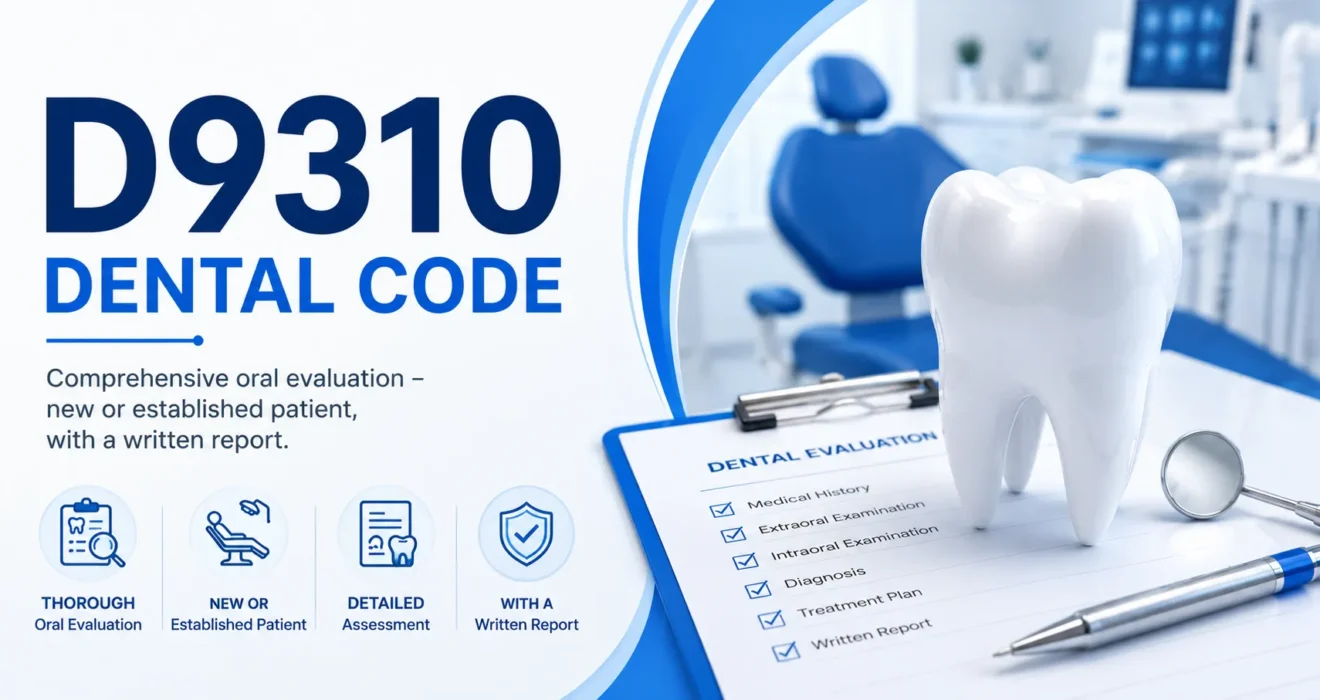
The D9310 dental code falls under the Adjunctive General Services category of the CDT code set, specifically inside the professional consultation group. It applies to consultations a dentist or dental specialist performs when a patient is referred by another dentist or physician seeking a diagnostic evaluation on a specific oral health concern. The key word here is “referral.” A patient cannot simply walk in and request a D9310 visit; another provider must request the opinion.
This code exists to formally separate a consulting opinion from a standard exam. D9310 represents a diagnostic service provided by a dentist or physician other than the one requesting the evaluation. The consulting dentist reviews the case, may order or review imaging, and shares findings back with the referring provider. Treatment is not required for this code to apply; the consultation itself is the billable event.
A common scenario looks like this: a general dentist spots a complex periodontal issue and refers the patient to a periodontist for a second opinion. The periodontist examines the patient, reviews history and radiographs, and sends a written report back to the general dentist. That visit qualifies for D9310, not a standard exam code.
Medical-dental crossover cases also use this code frequently. A dentist may consult with another healthcare provider, such as a physician, when a patient’s systemic illness could influence dental treatment decisions. This cross-disciplinary input strengthens the treatment plan and gives insurers a documented reason for the additional service.
It is worth noting that D9310 differs from a routine new-patient exam in both intent and structure. The consulting provider is not taking over ongoing care; they are offering a second set of eyes. Some payers limit this code to once per benefit period, so checking the patient’s plan before the appointment saves time later.
Insurers scrutinize consultation codes closely because they sit outside routine care. Practices that understand the code’s exact purpose, and use it only when a genuine referral exists, see far fewer denials than those that apply it loosely to any second-opinion visit.
When Should You Use the D9310 Code?
Not every second look at a patient’s mouth qualifies for D9310. The code applies only in specific, referral-driven situations. Use it when:
- A general dentist refers a patient to a specialist (periodontist, endodontist, oral surgeon, or prosthodontist) for an expert opinion on a complex case.
- A physician requests a dental consultation to understand how an oral condition affects a broader medical treatment plan.
- A patient’s systemic condition (diabetes, cardiac issues, autoimmune disorders) requires dental input before a medical procedure moves forward.
- The case involves interdisciplinary treatment planning, such as combined orthodontic-surgical cases requiring multiple specialist sign-offs.
- A formal written report will go back to the referring provider, documenting findings and recommendations.
D9310 does not apply when a patient self-refers for a second opinion without another provider’s request, or when the visit is simply a routine periodic exam. If the patient requests the consultation directly rather than through a referring provider, D9310 is not the correct code to bill.
D9310 vs. Similar CDT Codes
Confusing D9310 with neighboring codes is one of the fastest ways to trigger a claim denial. Here is how it stacks up against the codes it gets mixed up with most often:
- D9310 vs. D9311 (Medical Professional Consultation): D9310 covers a dental consultation between providers, while D9311 applies specifically when a medical professional consultation is needed for the dental treatment plan. Selecting the wrong one of these two codes can trigger claim denials or audits, so confirm which discipline actually performed the consultation.
- D9310 vs. D0140 (Limited Oral Evaluation): D0140 covers a focused exam for a specific problem by the treating dentist. D9310 covers a referred opinion from an outside provider. These codes describe different relationships between the patient and the provider.
- D9310 vs. D0150 (Comprehensive Oral Evaluation): A comprehensive exam evaluates the whole mouth for a new or returning patient. A comprehensive or limited exam is not an appropriate substitute for D9310 when an actual outside consultation takes place. The distinction lies in who is asking for the visit and why.
- D9310 and exam codes together: Most payers will not reimburse D9310 alongside a standard oral exam on the same date, by the same provider, for the same visit. Billing both typically results in one being denied as duplicate.
Documentation Checklist for a Clean D9310 Claim
Insurers reject consultation codes more often than routine exam codes, mainly because documentation falls short. Before submitting a D9310 claim, confirm the chart includes:
- The referring provider’s name and contact details, showing the consultation was requested, not self-initiated.
- A clear chief complaint and relevant medical or dental history tied to the referral reason.
- Clinical findings that specifically support a consultation, not a routine exam.
- Any diagnostic tests or imaging reviewed during the visit, along with how they informed the opinion.
- A written narrative summarizing the diagnosis, recommendations, and rationale, sent back to the referring provider.
- Post-visit notes, including any follow-up recommendations or next steps for treatment.
Many payers also require a narrative directly in the claim’s remarks section, summarizing medical necessity and radiographic findings. Skipping this step is one of the most common reasons consultation claims stall in review.
Proven Tips to Maximize D9310 Reimbursement
Getting paid for a D9310 consultation comes down to preparation, not luck. Build these habits into your billing workflow:
- Verify benefits first. Not every dental plan covers consultation visits, so confirm eligibility before the appointment rather than after the claim bounces back.
- Attach the referral letter. A documented request from the referring provider is the foundation of the entire claim.
- Submit a complete narrative. Vague notes invite denials; specific clinical detail speeds up review.
- Avoid double billing. Do not pair D9310 with an oral exam code for the same visit unless the payer explicitly allows it.
- Track payer-specific limits. Many plans cap consultations at once per benefit year, so confirm the patient’s history before scheduling.
- Appeal denials with evidence. If a claim is denied, review the Explanation of Benefits and resubmit with the missing documentation rather than dropping the claim entirely.
Practices that build these checks into their front-office routine see noticeably fewer rejected consultation claims.
Common D9310 Billing Mistakes to Avoid
Even experienced billing teams slip up on consultation codes. Watch for these recurring errors:
Billing D9310 without a genuine referral is the most frequent mistake. The code exists for provider-to-provider consultations, not patient-initiated second opinions.
Submitting the claim without a written narrative almost guarantees a request for additional information, which delays payment by weeks.
Pairing D9310 with a routine exam code on the same date often results in an automatic denial of one of the two codes.
Forgetting to check the patient’s annual consultation limit before the visit can leave the practice billing for a service the plan will not cover.
Treating D9310 as interchangeable with D9311 ignores the difference between a dental and a medical professional consultation, a mix-up that frequently triggers an audit flag.
Conclusion
The D9310 dental code plays a small but important role in coordinated patient care. It exists for genuine, referral-based consultations between providers, not routine exams or self-requested second opinions. Practices that document the referral, the clinical findings, and the written report back to the referring provider consistently see cleaner claims and faster reimbursement. Take the time to verify coverage, avoid pairing D9310 with other exam codes, and keep documentation specific. Get these fundamentals right, and the D9310 dental code becomes a reliable, low-friction part of your billing process rather than a recurring source of denials.