D2392 Dental Code Explained: A Complete Billing Guide
Dental coding can feel confusing, especially when claims get denied over small errors. The D2392 dental code is one of the most frequently used billing codes in restorative dentistry. It applies to resin-based composite fillings placed on two surfaces of a posterior tooth. Dentists rely on this code to bill insurance accurately for molar and premolar restorations. Billing teams and office managers need to understand it too, since incorrect use leads to denied claims and lost revenue. This guide breaks down everything you need to know about the D2392 dental code. You will learn its definition, when to use it, how to bill it properly, and how it compares to similar codes. By the end, you will handle D2392 claims with far more confidence.
What Is the D2392 Dental Code?
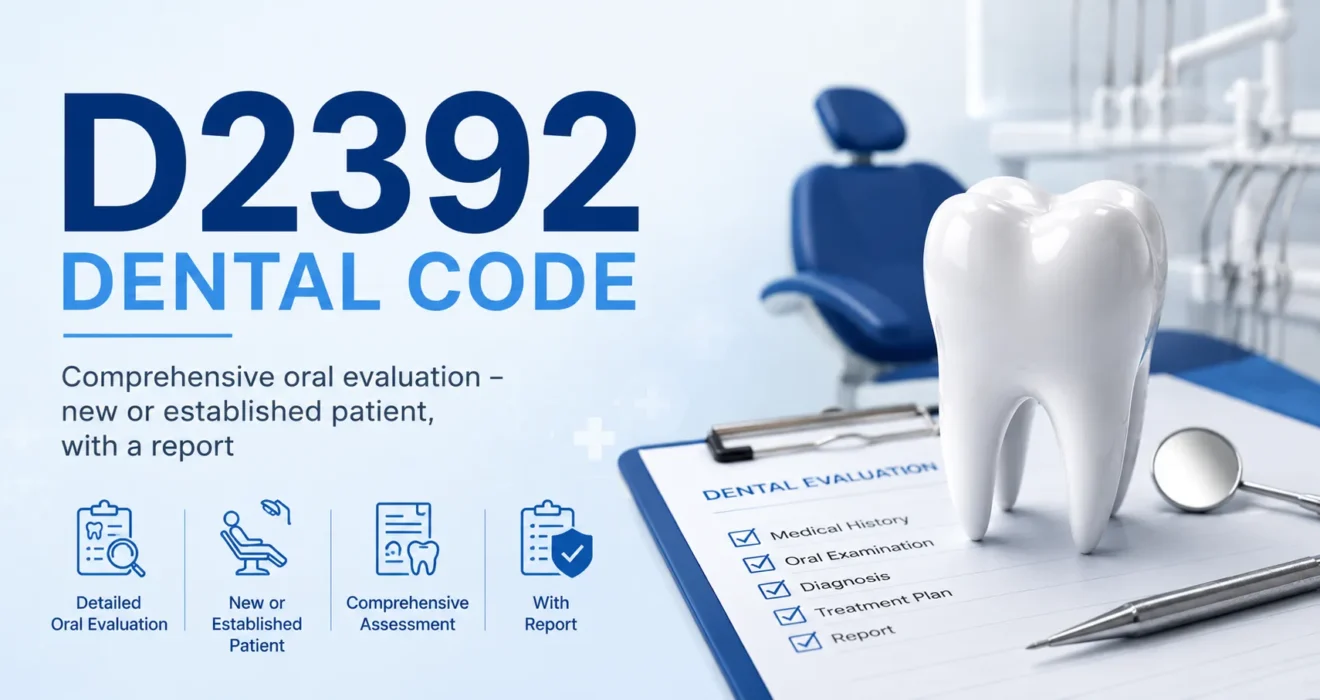
The D2392 dental code identifies a resin-based composite restoration that covers two surfaces of a posterior tooth. Posterior teeth include premolars and molars, the teeth located toward the back of the mouth. Dentists assign this code when decay, fracture, or old filling failure affects exactly two surfaces of the same tooth. A common example combines the occlusal surface, the chewing area on top, with a proximal surface on the side. The code distinguishes this procedure from single-surface or three-surface restorations, which use different codes entirely.
Resin-based composite material gives this restoration its tooth-colored appearance. The material blends a resin matrix with fine particles of glass or quartz filler. This combination creates a strong, natural-looking surface that mimics real enamel. Patients often prefer composite over metal amalgam because it blends seamlessly with surrounding teeth. Dentists also favor composite because it bonds directly to the tooth and preserves more natural structure.
The number of surfaces involved determines which CDT code applies to a restoration. A single-surface filling uses D2391, while a two-surface filling uses D2392. Three-surface and four-or-more-surface restorations move up to D2393 and D2394. Selecting the correct surface count protects the practice from underbilling or overbilling a claim. It also keeps the patient’s dental record accurate for any future treatment.
Dentists, billing specialists, and insurance reviewers all interact with this code regularly. The dentist documents the clinical findings and performs the restoration during the visit. The billing team then translates that clinical work into the correct CDT code for submission. Insurance reviewers compare the submitted code against supporting documentation before approving payment. Each party depends on accurate coding to keep the reimbursement process moving smoothly.
Standardized codes like D2392 exist because dentistry needs a shared language for billing. The American Dental Association maintains the CDT code set used across the United States. This standardization allows dental offices and insurance companies to communicate without confusion. Without consistent codes, every claim would require lengthy manual explanation. D2392 plays a small but essential role in that larger system of dental billing accuracy.
Proper use of D2392 still depends on strong supporting records. Clinical notes, radiographs, and a clear description of the affected surfaces all matter. Insurance companies frequently request this evidence before approving reimbursement. Practices that maintain thorough documentation experience fewer denials and faster payments. Understanding the code itself is only the first step toward billing it successfully.
When Do Dentists Use the D2392 Code?
Dentists apply D2392 in specific clinical situations, not every posterior filling. Recognizing these scenarios in advance helps the billing team code each claim correctly the first time.
Common Clinical Scenarios
Dentists typically use D2392 in the following situations:
- Decay across two surfaces of a molar or premolar, such as the occlusal and mesial surfaces together
- Fracture repair where a chip or crack damages two distinct areas of the same tooth
- Replacement of an old or failing restoration, such as a worn amalgam filling, that now spans two surfaces
- Trauma-related damage affecting two surfaces after an injury to the back teeth
- Combined small cavities that merge into a single restoration covering two surfaces
Tooth Types That Qualify
Only certain teeth qualify for this particular code. D2392 applies to:
- Permanent molars and premolars
- Primary (baby) molars in pediatric patients
- Any posterior tooth, as long as exactly two surfaces require restoration
Anterior teeth, such as incisors and canines, use a completely different set of composite codes. Mixing up anterior and posterior codes is one of the most common coding mistakes dental offices make.
How to Bill D2392 the Right Way
Billing this code correctly requires a consistent process from the clinical exam through final claim submission. Skipping steps increases the risk of denial and delayed reimbursement.
Step-by-Step Billing Process
- Document the clinical exam thoroughly, noting decay, fracture, or damage location.
- Identify and record the exact surfaces involved, such as occlusal and distal.
- Confirm the tooth is posterior, since anterior teeth require different codes.
- Attach supporting evidence, including radiographs and detailed clinical notes.
- Submit the claim with D2392 along with all required documentation.
- Review the Explanation of Benefits once the insurer processes the claim.
- Appeal promptly with additional narrative if the claim is denied or underpaid.
Following each step in order reduces back-and-forth with insurance companies. It also creates a clean audit trail if the claim is ever questioned later.
D2392 vs. D2391, D2393, and D2394: What’s the Difference?
These four codes belong to the same family, but they are not interchangeable. The only real difference between them is the number of restored surfaces.
Side-by-Side Comparison
- D2391 — Resin-based composite, one surface, posterior tooth
- D2392 — Resin-based composite, two surfaces, posterior tooth
- D2393 — Resin-based composite, three surfaces, posterior tooth
- D2394 — Resin-based composite, four or more surfaces, posterior tooth
Choosing the wrong code from this group is a frequent and costly error. Undercoding a three-surface restoration as D2392 leaves money on the table for the practice. Overcoding a single-surface filling as D2392 can trigger an audit or claim reversal. Clinical notes should always state the exact surfaces treated, not just a general surface count. This single detail determines which code in the family applies to the claim.
Why D2392 Claims Get Denied (And How to Avoid It)
Even correctly performed restorations sometimes get denied because of avoidable paperwork issues. Knowing the most common denial triggers helps practices fix problems before they happen.
Top Denial Reasons
- Missing or unclear radiographs that fail to confirm decay across two surfaces
- Incomplete clinical notes that do not specify which two surfaces were restored
- Incorrect tooth numbering that conflicts with the surfaces listed on the claim
- Frequency limitations from the insurer, especially on the same tooth within a short period
- Missing narrative when the restoration replaces a recent prior filling
Most denials trace back to documentation gaps rather than actual treatment errors. A few extra minutes spent on notes during the visit can prevent weeks of delay during the claims process.
Best Practices to Maximize Reimbursement
Strong habits around documentation and verification protect both the practice and the patient from unexpected costs.
Documentation and Verification Tips
Practices that consistently get paid for D2392 claims tend to follow the same core habits:
- Verify insurance benefits before treatment, including any frequency or downgrade clauses.
- Take clear radiographs that visibly show decay or damage on both surfaces.
- Write specific clinical notes naming the exact surfaces, not just “two-surface filling.”
- Submit a narrative whenever the case involves replacement, trauma, or unusual circumstances.
- Track denied claims and appeal quickly with additional documentation when needed.
Consistency matters more than any single tip on this list. Practices that apply these habits to every claim, not just complicated ones, see fewer denials over time.
Conclusion
The D2392 dental code plays a small but important role in everyday dental billing. It identifies a resin-based composite restoration covering two surfaces of a posterior tooth, distinguishing it clearly from D2391, D2393, and D2394. Dentists use it whenever decay, fracture, or restoration replacement affects exactly two surfaces of a molar or premolar. Billing teams succeed with this code by documenting surfaces precisely, attaching strong radiographs, and submitting clear clinical narratives. Most denials come from documentation gaps rather than treatment problems, which means most denials are preventable. Practices that build consistent habits around D2392 claims see faster payments and fewer rejected submissions. Mastering one code well makes the entire billing workflow more reliable for the whole team.