Why Does My Tooth Hurt When I Bite Down? Causes, Symptoms, and What to Do
Tooth pain when biting down is a common dental issue that many people experience at some point. While it may seem minor at first, this type of pain can indicate an underlying problem that needs attention. Understanding why your tooth hurts when you bite down can help you take the right steps before the condition worsens.
In this guide, we’ll explain the most common causes, how to identify the symptoms, and what you should do to relieve the pain.
What Does It Mean When Your Tooth Hurts While Biting?
If you feel pain only when you bite down or chew, it usually means that pressure is affecting a sensitive or damaged part of your tooth. Healthy teeth can handle normal biting force without discomfort. So when pain occurs, it’s often a sign that something is wrong beneath the surface.
This type of pain can range from a sharp, sudden sensation to a dull ache that lingers after chewing.
Common Causes of Tooth Pain When Biting Down
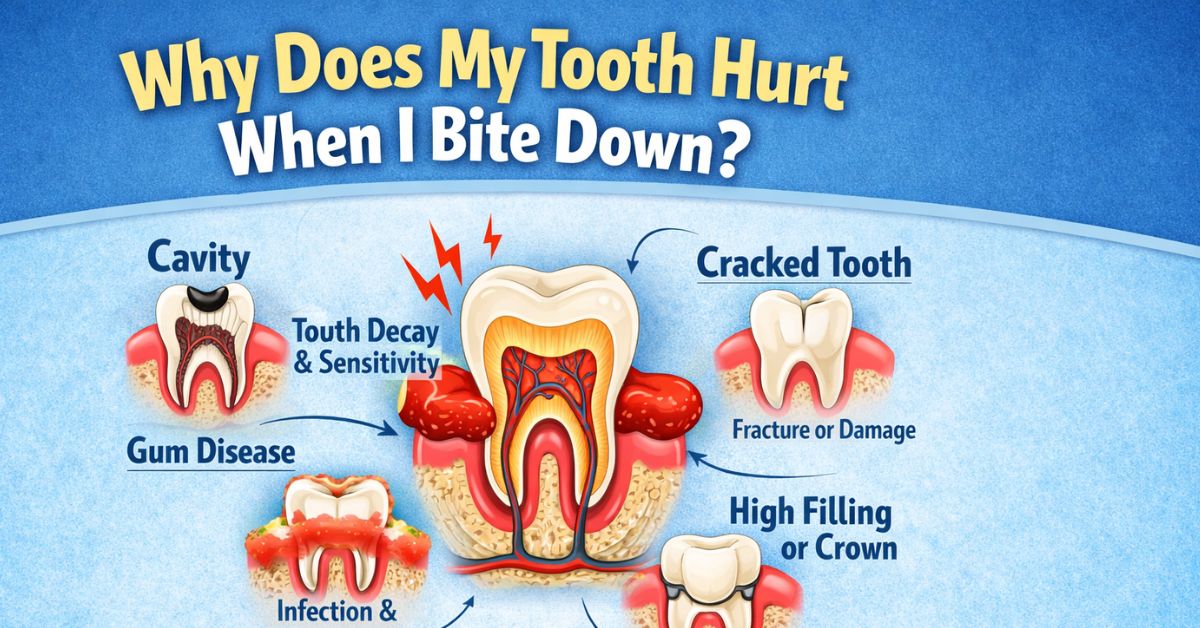
1. Cracked Tooth
A cracked tooth is one of the most common reasons for pain when biting.
When you apply pressure, the crack can slightly open, irritating the inner nerve (pulp) of the tooth. When you release the pressure, the crack closes again, which can also trigger pain.
Signs of a cracked tooth:
- Sharp pain when biting or releasing pressure
- Pain that comes and goes
- Difficulty identifying which tooth hurts
2. Tooth Decay (Cavity)
A cavity can weaken the structure of your tooth and expose the inner layers.
When you bite down, pressure reaches the sensitive dentin or nerve, causing discomfort.
Other symptoms:
- Sensitivity to sweets, hot, or cold
- Visible holes or dark spots
- Persistent toothache
3. Loose or Damaged Filling or Crown
If you’ve had dental work done, the issue might be related to a filling or crown.
Over time, these restorations can loosen, crack, or shift slightly, causing uneven pressure when you bite.
Symptoms include:
- Pain when chewing on one side
- Sensitivity in a previously treated tooth
- Feeling that your bite is “off”
4. Tooth Infection or Abscess
A tooth abscess is a serious infection that develops in the root or surrounding tissue.
When you bite down, pressure increases inside the infected area, leading to significant pain.
Warning signs:
- Throbbing or severe pain
- Swelling in gums or face
- Bad taste in the mouth
- Fever (in advanced cases)
5. Gum Disease or Inflammation
Your gums support your teeth. When they become inflamed or infected, the surrounding tissue can become sensitive to pressure.
Common symptoms:
- Red, swollen gums
- Bleeding when brushing
- Pain when chewing
6. Bite Misalignment (Occlusion Issues)
If your bite is not properly aligned, certain teeth may receive more pressure than others.
This uneven force can lead to pain when biting.
Signs include:
- Jaw discomfort
- Uneven tooth wear
- Pain in specific teeth when chewing
7. Teeth Grinding (Bruxism)
Grinding or clenching your teeth—especially at night—can cause micro-damage to your teeth.
Over time, this can make them sensitive to pressure.
Symptoms:
- Morning jaw pain
- Worn or flattened teeth
- Headaches
8. Sinus Pressure (For Upper Teeth)
Sometimes, the issue isn’t your tooth at all.
Sinus infections or pressure can affect the nerves near your upper teeth, causing pain when you bite down.
How to Tell What’s Causing Your Tooth Pain
While only a dentist can give a definitive diagnosis, certain clues can help you narrow down the cause:
| Symptom | Possible Cause |
|---|---|
| Sharp pain when biting | Cracked tooth |
| Constant throbbing pain | Infection or abscess |
| Sensitivity to temperature | Cavity or nerve exposure |
| Pain in treated tooth | Filling or crown issue |
| Gum swelling | Gum disease or infection |
When Is Tooth Pain a Dental Emergency?
You should seek immediate dental care if you experience:
- Severe or worsening pain
- Swelling in your face or jaw
- Fever
- Pus or discharge
- Difficulty opening your mouth or swallowing
These symptoms may indicate a serious infection that requires urgent treatment.
What You Can Do at Home for Temporary Relief
While home remedies won’t fix the root problem, they can help reduce discomfort until you see a dentist.
1. Avoid Chewing on That Side
Reduce pressure on the affected tooth to prevent further irritation.
2. Use Warm Salt Water Rinse
This helps reduce inflammation and kill bacteria.
3. Take Over-the-Counter Pain Relievers
Medications like ibuprofen can help manage pain temporarily.
4. Avoid Hard or Sticky Foods
These can worsen the condition or damage the tooth further.
5. Apply a Cold Compress
If there is swelling, a cold compress can help reduce inflammation.
When Should You See a Dentist?
You should visit a dentist if:
- Pain lasts more than 1–2 days
- Pain worsens over time
- You notice swelling or sensitivity
- You have difficulty chewing normally
Early diagnosis can prevent more serious and costly treatments later.
Treatment Options for Tooth Pain When Biting
Depending on the cause, your dentist may recommend:
- Dental filling for cavities
- Crown for cracked or damaged teeth
- Root canal for infected pulp
- Gum treatment for periodontal issues
- Bite adjustment for alignment problems
- Night guard for teeth grinding
How to Prevent Tooth Pain in the Future
Preventive care is the best way to avoid dental problems.
Follow these tips:
- Brush twice daily with fluoride toothpaste
- Floss regularly
- Visit your dentist every 6 months
- Avoid chewing hard objects (ice, pens)
- Wear a mouthguard if you grind your teeth
- Limit sugary foods and drinks
Frequently Asked Questions
Why does my tooth hurt only when I bite down?
This usually indicates pressure-related issues such as a cracked tooth, cavity, or bite misalignment.
Can a cracked tooth heal on its own?
No. A cracked tooth requires dental treatment to prevent further damage.
Is tooth pain when biting a sign of infection?
It can be. Especially if the pain is severe, persistent, or accompanied by swelling.
Will the pain go away on its own?
Sometimes mild sensitivity may improve, but most causes require professional treatment.
Final Thoughts
Tooth pain when biting down is your body’s way of signaling that something isn’t right. Whether it’s a minor issue like sensitivity or a more serious condition like an infection, ignoring the problem can lead to complications.
If the pain persists, the safest and most effective solution is to consult a dentist as soon as possible. Early treatment not only relieves discomfort but also protects your long-term oral health.